ŠKARNULYTĖ EMILIJA
ŠKARNULYTĖ EMILIJA
As an experimental filmmaker I’ll often collaborate with researchers in fields of geology, marine biology, astrophysics, and quantum physics. I need that feedback, questioning, and the research-based process. Maybe we don’t see it in the works, but the challenging dialog is helpful in the mediums of video sculpture and sound-immersive spaces. For the last 12 years, I’ve been taking this into different themes: cosmic supernovas, dying black hole sounds, radioactivity, or descending to oceans in four time zones deprived of oxygen and light. I’ve been looking for what’s invisible to the naked eye, intangible, untouchable.
Emilija Škarnulytė

Emilija Škarnulytė (b. 1987, Vilnius, LT) works between documentary and imaginary realms, creating films, installations, sculptures, drawings, and immersive time-based media that explore the entanglement of the human, the ecological, and the cosmic. She studied sculpture at the Brera Academy of Fine Arts in Milan (IT) and holds an MA from the Tromsø Academy of Contemporary Art (NO). Her work inhabits deep time—spanning geological epochs, submarine architectures, and post-anthropocentric futures—where speculative fiction and documentary intertwine. Assuming the perspective of a future archaeologist, Škarnulytė reveals infrastructures of power—military, ecological, and mythological—that extend into the unseen territories of oceans, cosmic matter, and memory. Škarnulytė is the founder and co-director of Polar Film Lab, a collective for analogue film practice based in Tromsø, Norway, and a member of the artist duo New Mineral Collective. She lives and works nomadically.
In 2026, Škarnulytė presents her solo exhibition Arrow of Time at Kunstmuseum St. Gallen (CH). In 2025, she presented major solo exhibitions at Tate St Ives (UK) and Kunsthaus Graz (AT). Earlier solo projects include Kunsthall Trondheim (NO, 2024) and Canal Projects, New York (US, 2024). She has exhibited in numerous international group exhibitions, including MoMA PS1 (US, 2022), Louisiana Museum of Modern Art (DK, 2022), Mori Art Museum (JP, 2021), and Kiasma (FI, 2021), and has participated in the Gwangju Biennale (KR, 2021), Helsinki Biennial (FI, 2021), Vilnius Biennial (LT, 2020), and the Henie Onstad Triennial for Photography and New Media (NO, 2020). She represented Lithuania at the XXII Triennale di Milano (IT, 2019) and in the Baltic Pavilion at the Venice Architecture Biennale (2018). Škarnulytė is the recipient of the 2019 Future Generation Art Prize and the 2023 Ars Fennica Award.
RIPARIA
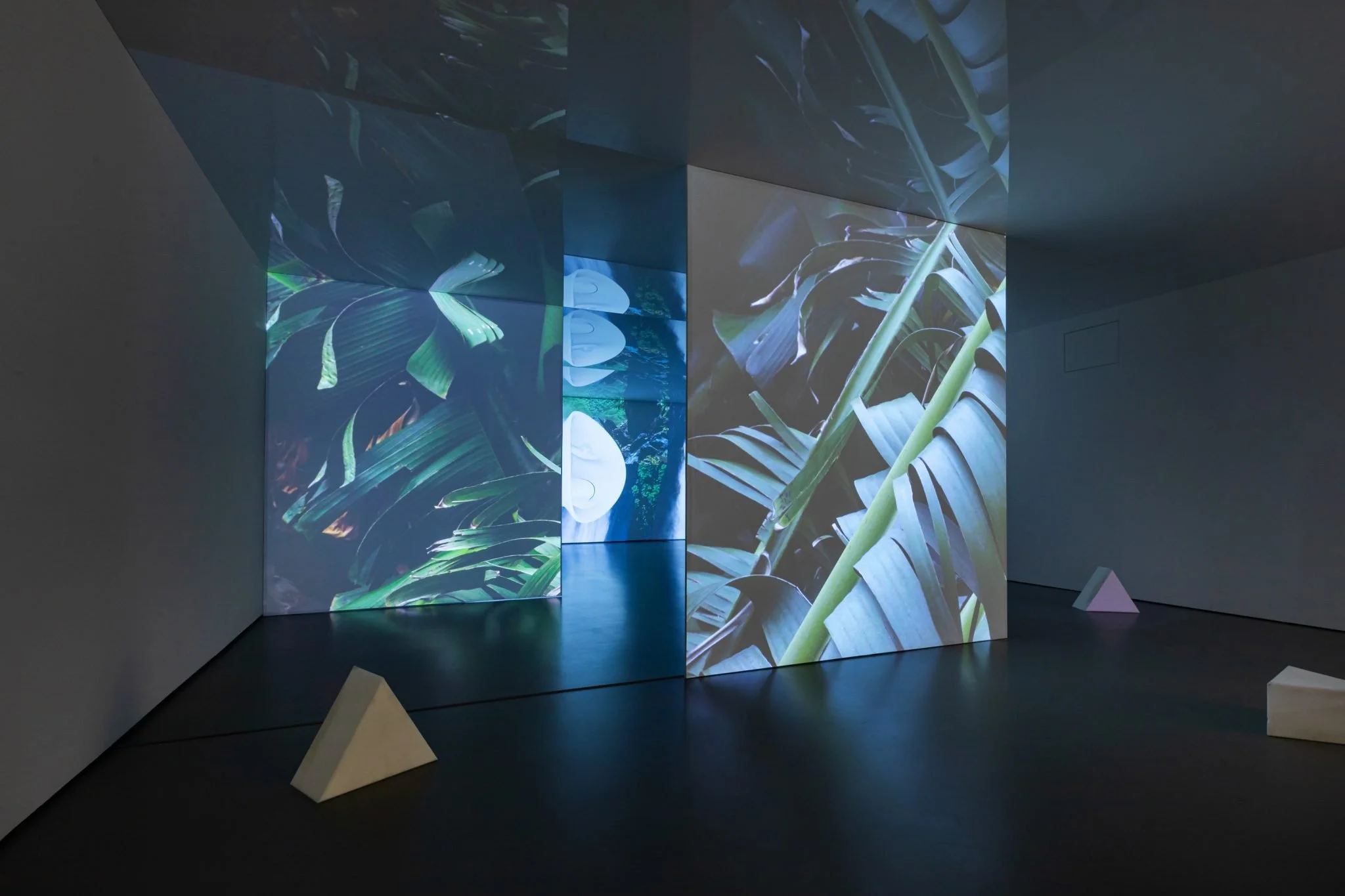
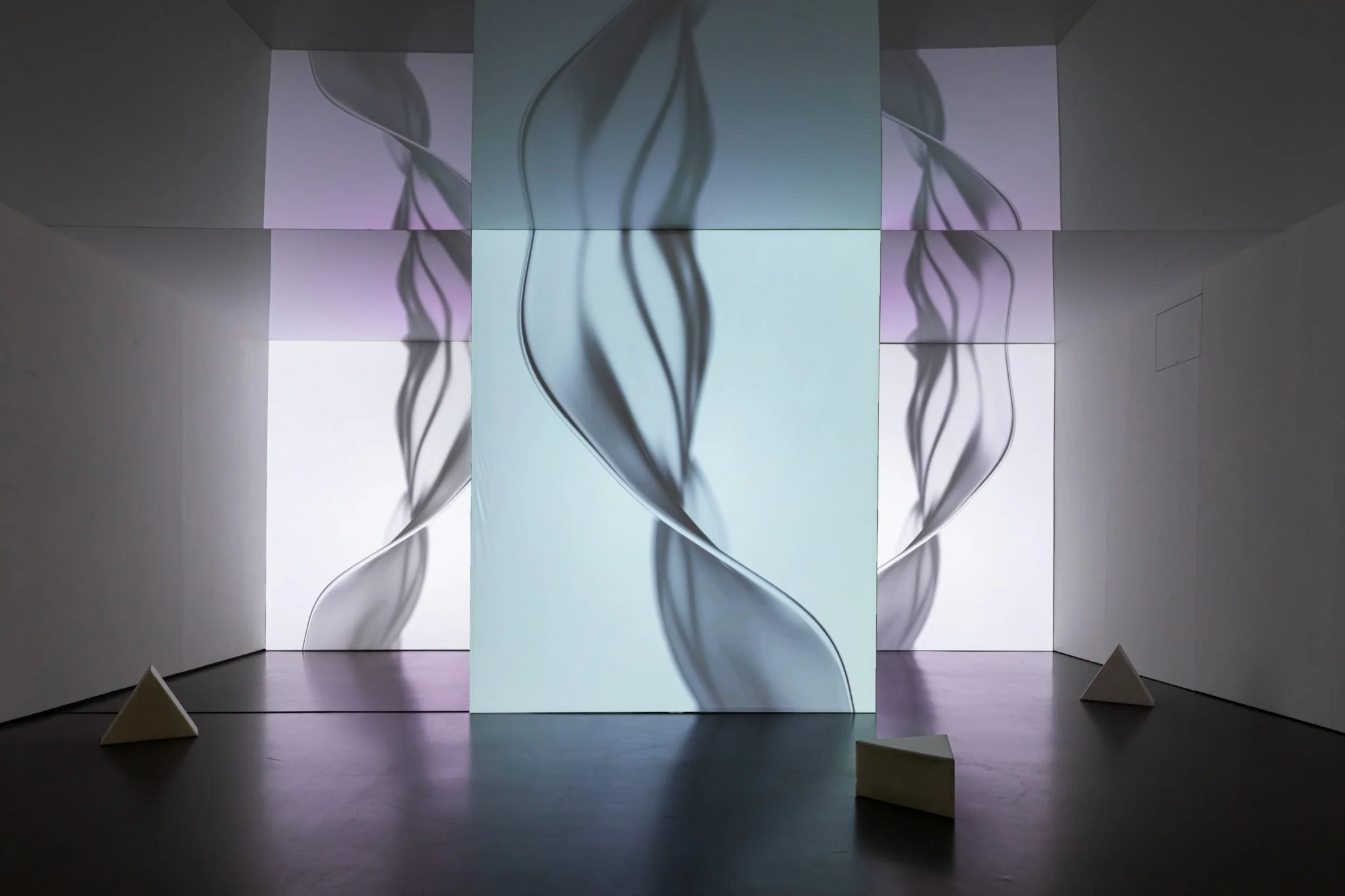
Riparia examines the river as a geographic boundary, a living entity, and an origin of human settlement. Filmed along the length of the Rhône river, a waterway that has been used by humans for millennia, it reflects upon rivers as a driving force in shaping systems of exchange, power, and belief.
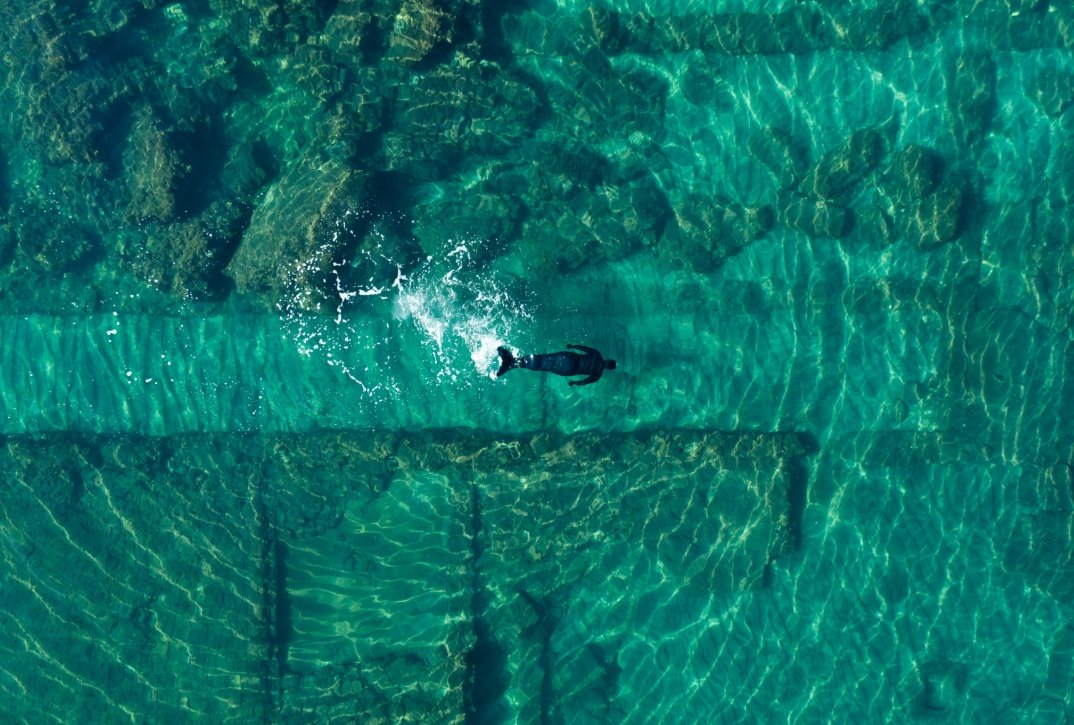
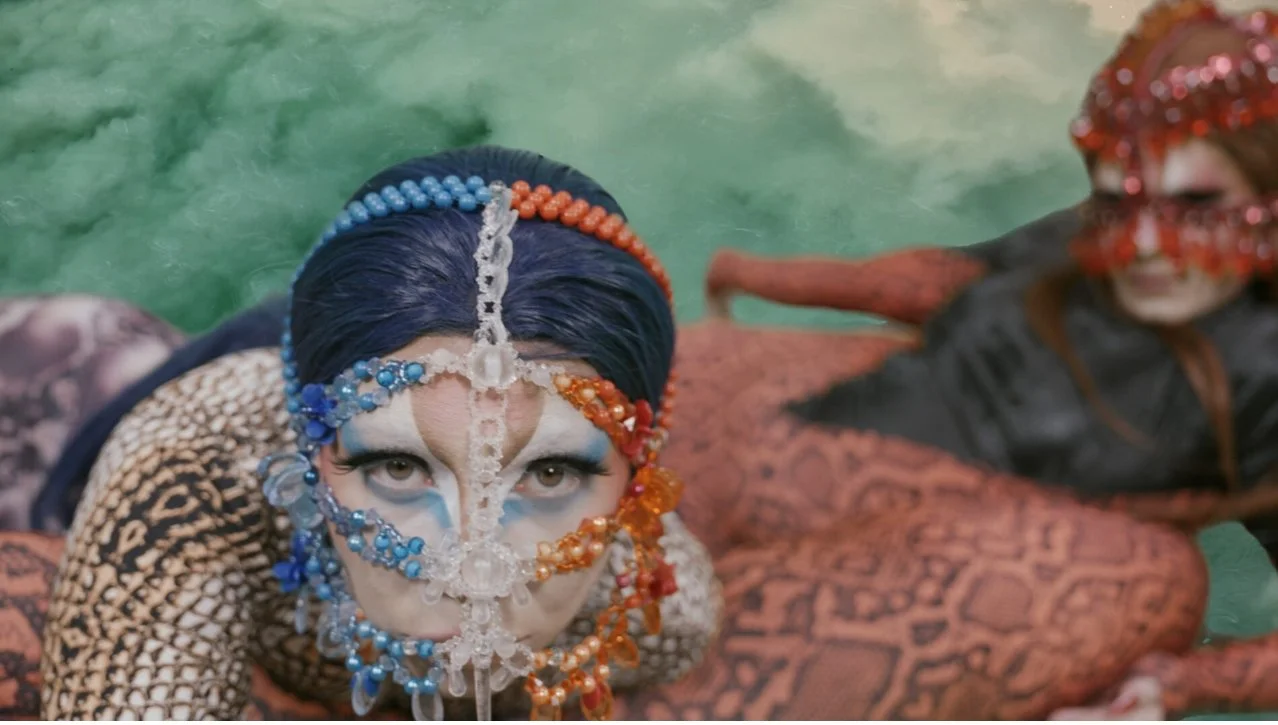
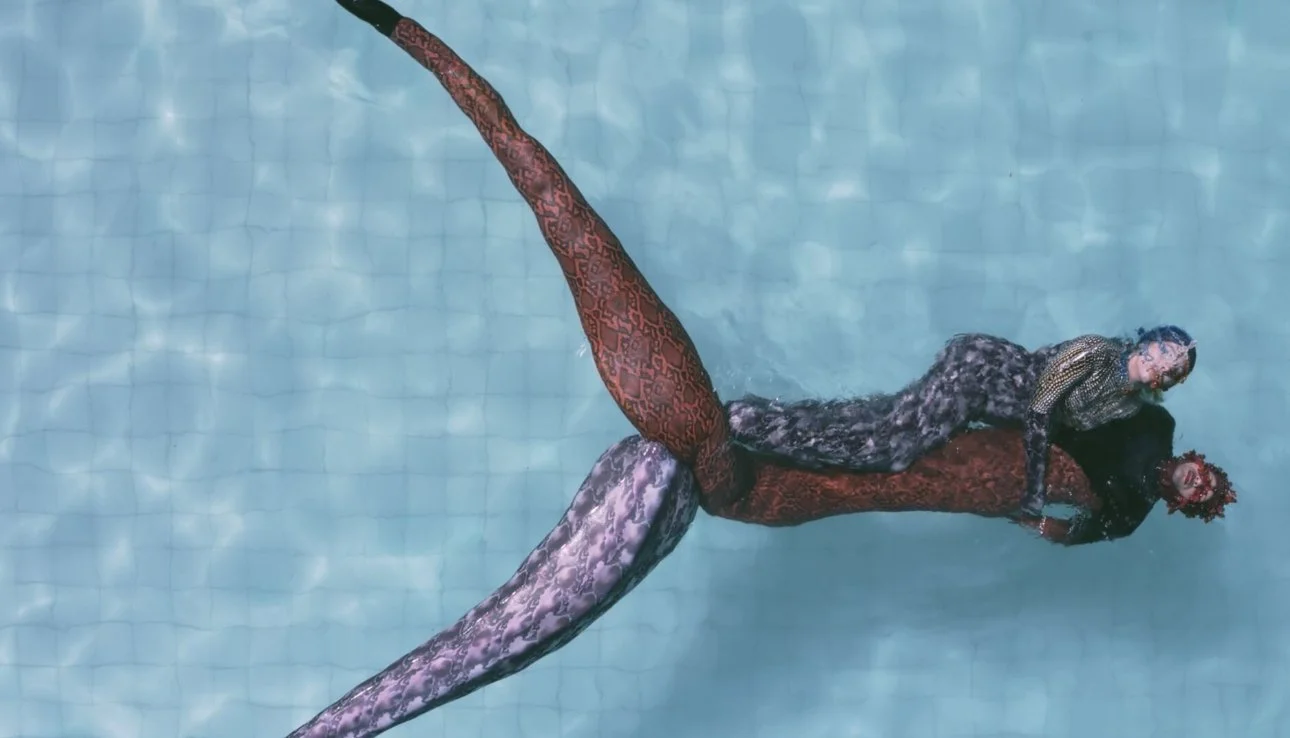
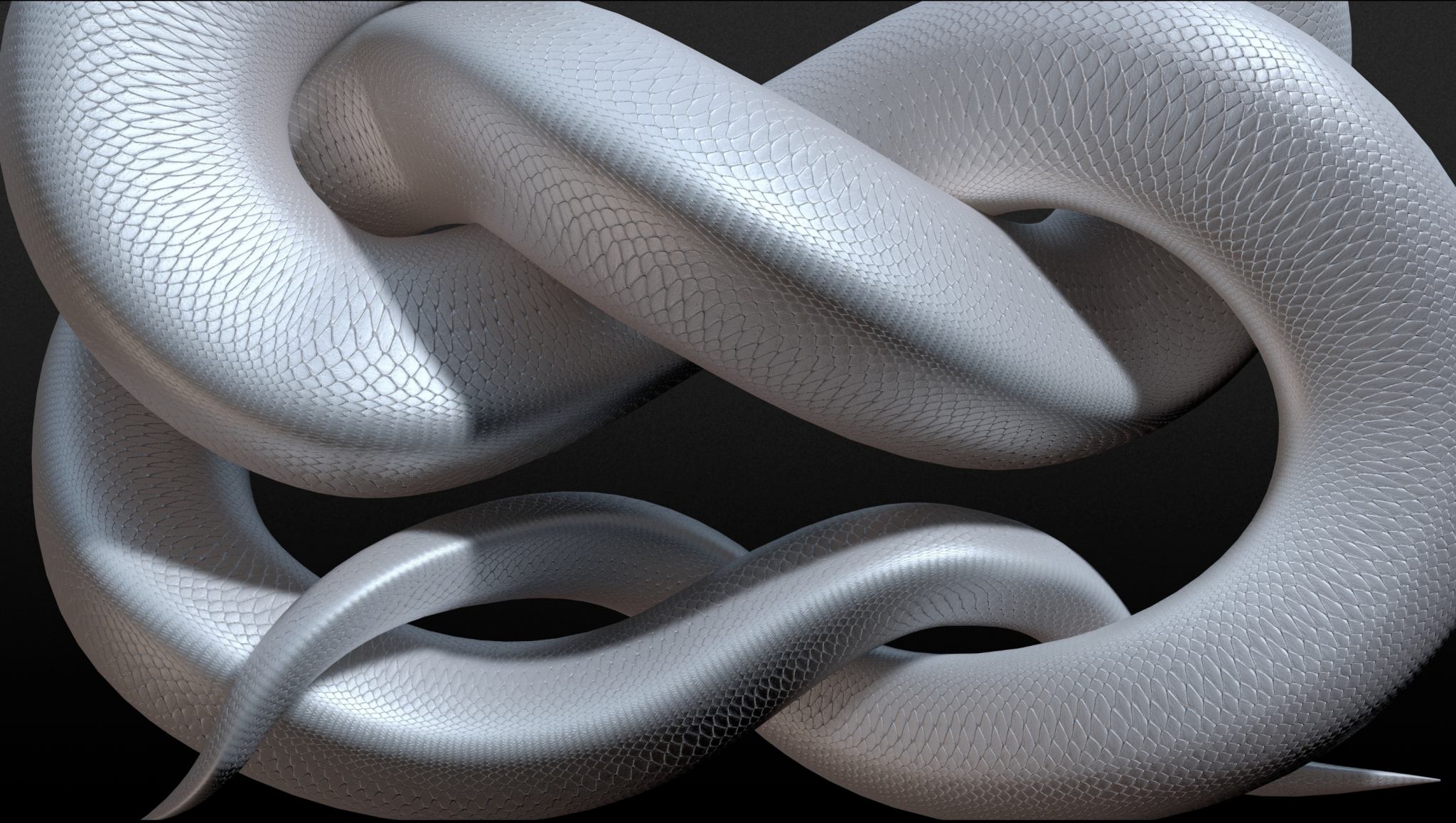
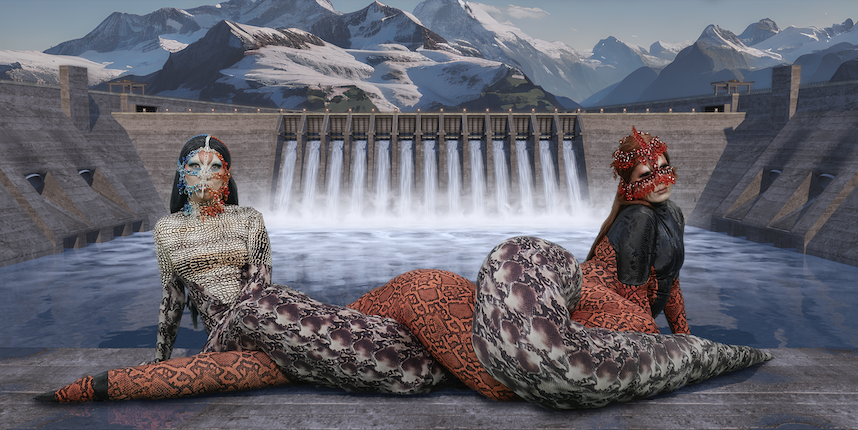
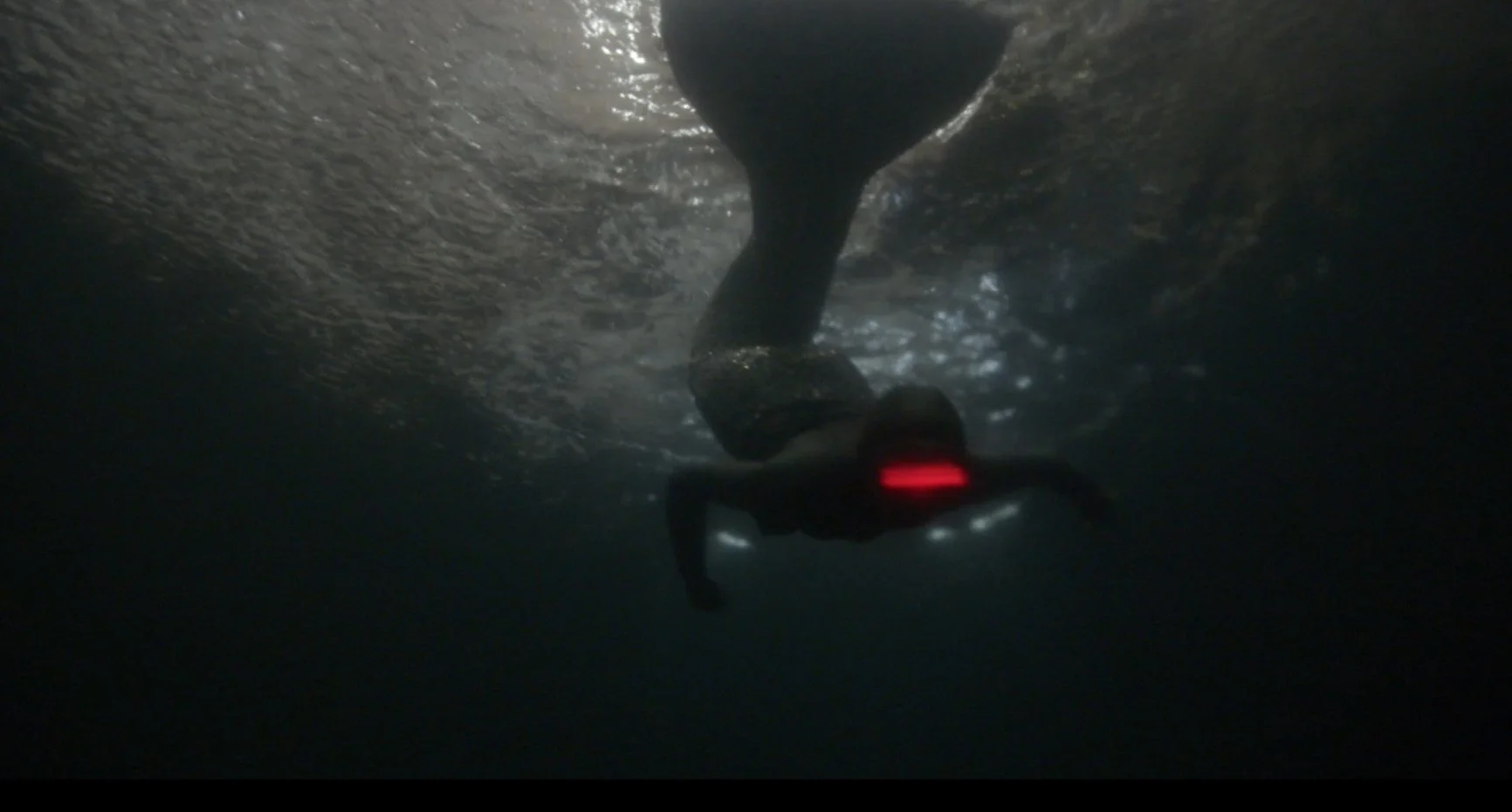
Two goddess-like mythical beasts embrace, navigating a vast expanse of water just downstream from a Swiss hydroelectric plant. As the river surges and churns in its wake, the serpents appear hovering above it, transforming the rushing waters into a cosmic cloud. The twin sea-snake creatures allude to the myth of the Gemini, who are not only twins but the keepers of secrets, communications, and most of all, symbolize mutability and change. Slow, meditative shots further connect these figures with the theories of Lithuanian archaeologist and anthropologist, Marija Gimbutas (1921–94), who interpreted Neolithic societies along European rivers as matriarchal and oriented toward the worship of water deities. Such historical and mythological figures are part of the river’s sedimented history as much as the present-day hydroelectric dams, highlighting how human intervention, conflict, and resource extraction have replaced earlier forms of aquatic reverence.
Emilija Škarnulytė, Riparia, video, 10’ 14’’, 2023. Co-produced with Ferme-Asile (Sion, Switzerland) and Taurus Foundation for Arts and Sciences.
SUNKEN CITIES
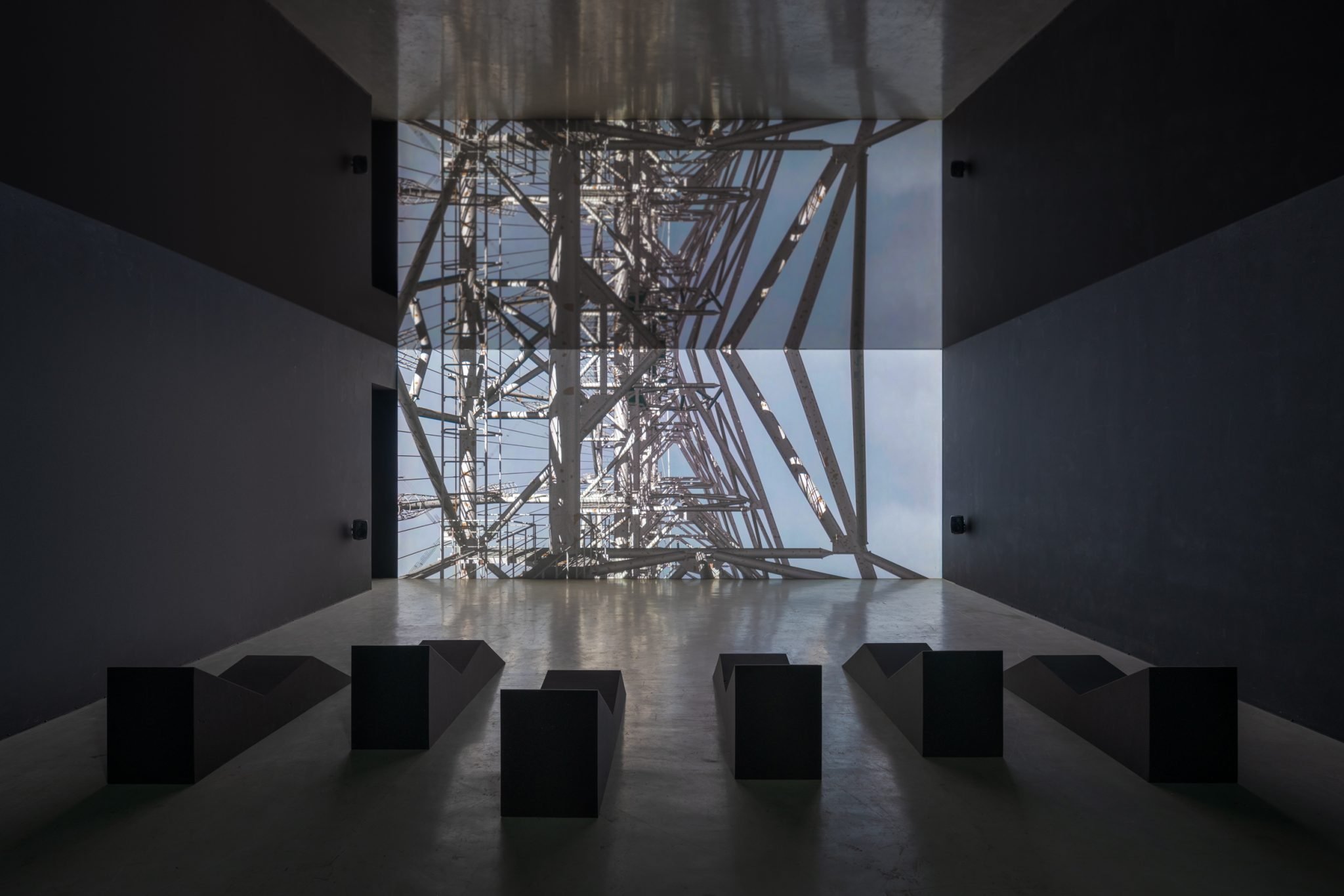
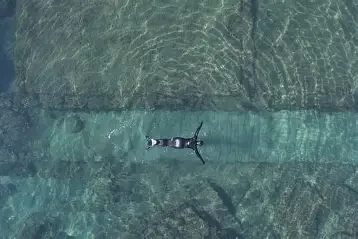
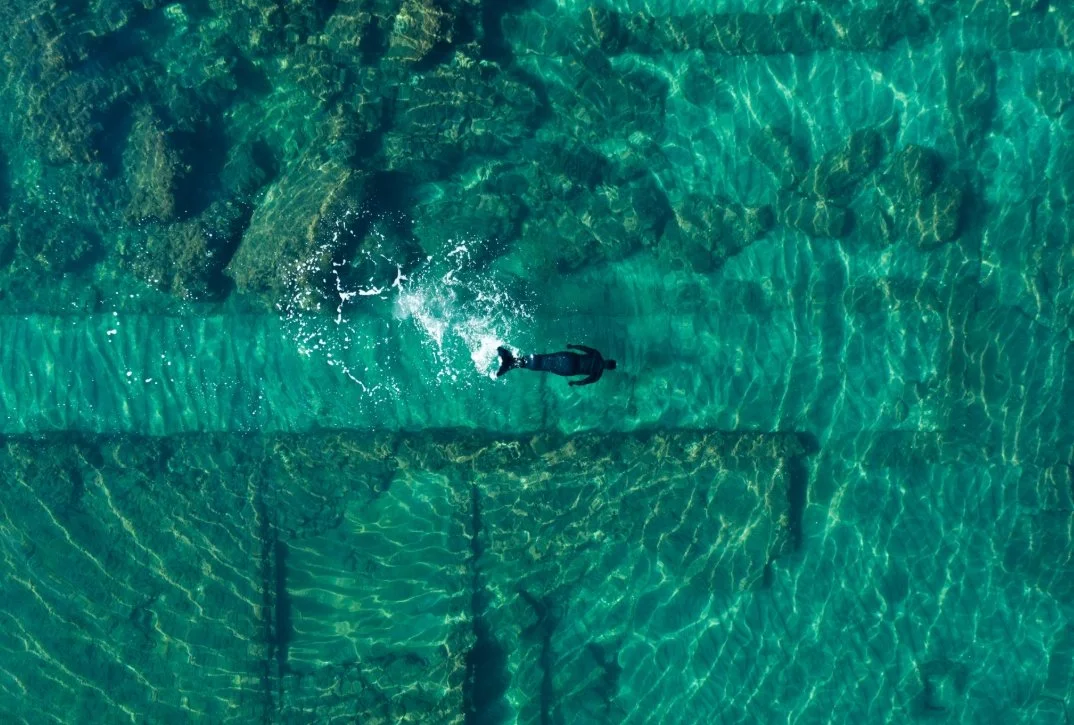
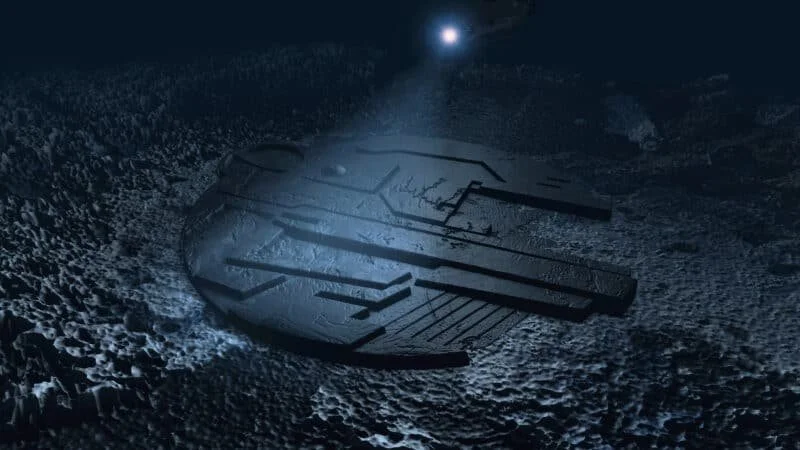
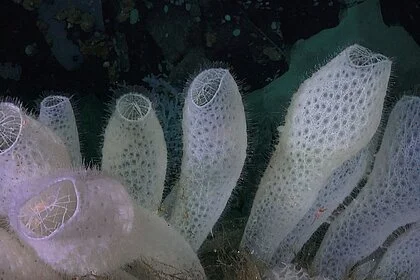
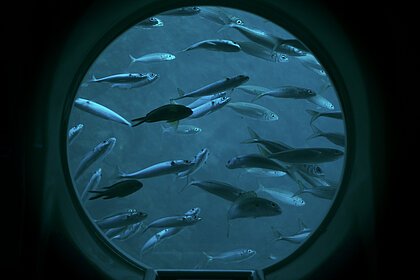
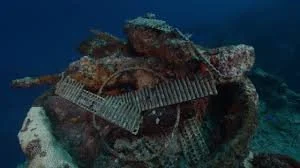
Sunken Cities takes usinto the submerged Roman city of Baiae – once a place of abundance, now lying beneath the Mediterranean after centuries of volcanic activity. On the seabed, the 2,000-year-old remains of a hedonistic retreat appear: marble corridors, stone halls, overgrown mosaics, and strange scaffolding structures. Like a future archaeologist, Škarnulytė traverses a sunken landscape where past, present, and future flow into one another. Immersion becomes a form of transformation: culture settles into sediment, memory turns into ecosystems, and human traces merge with planetary cycles. Sunken Cities is a visual meditation on the persistence of change—civilizations may disappear, yet their traces will continue to resonate through water, stone, and time.
Emilija Škarnulytė, Sunken Cities, video, 9', 2021.
HYPOXIA
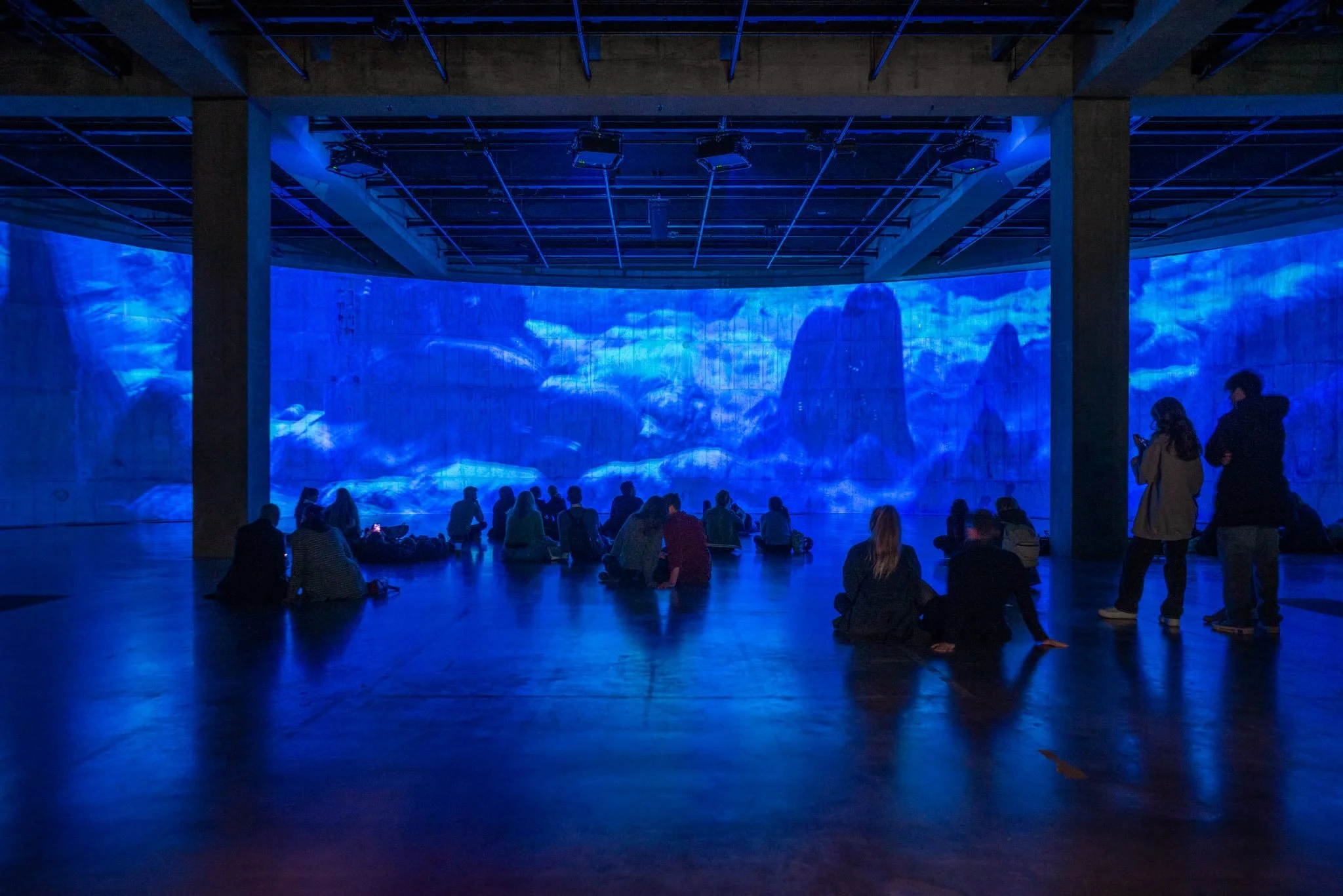
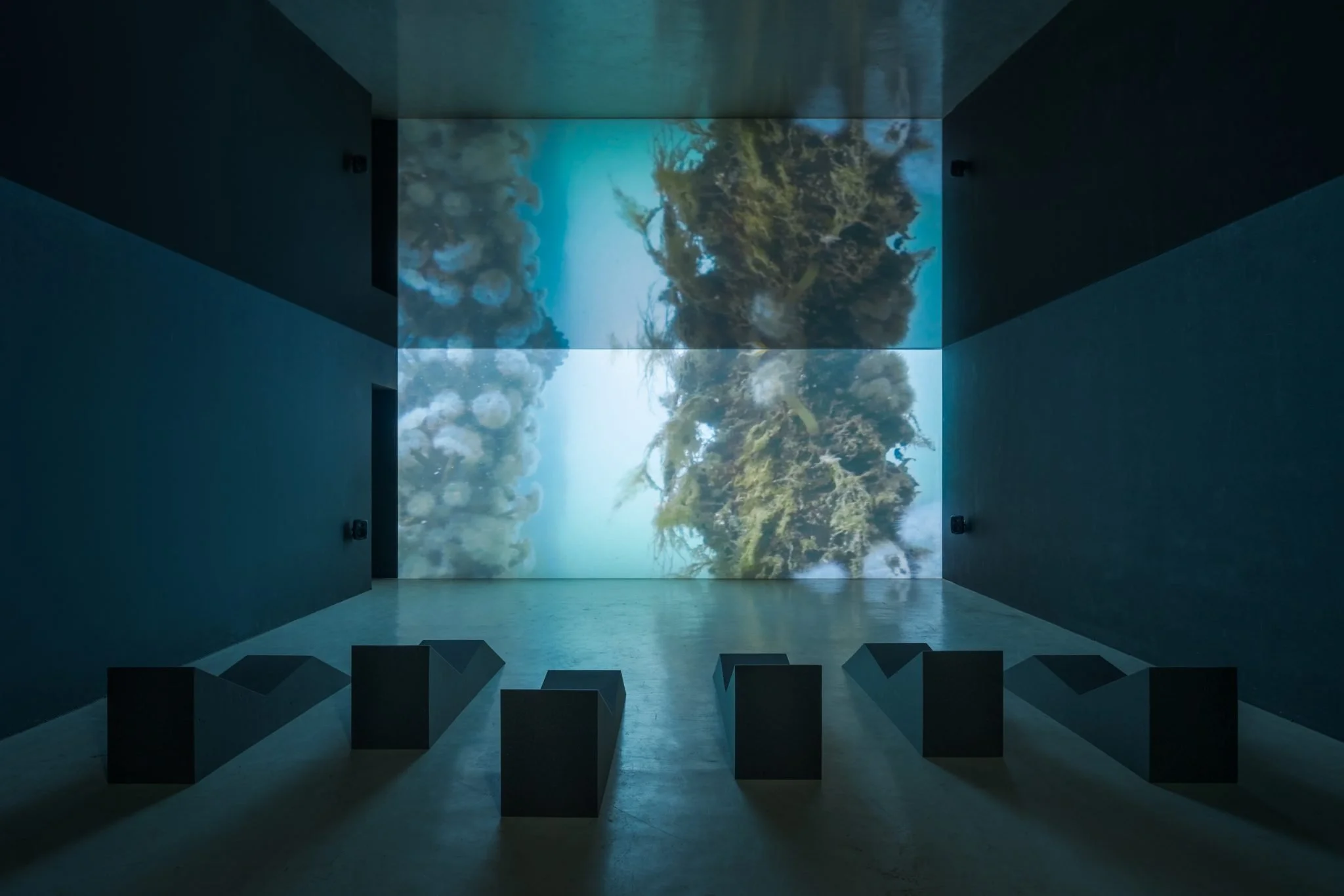
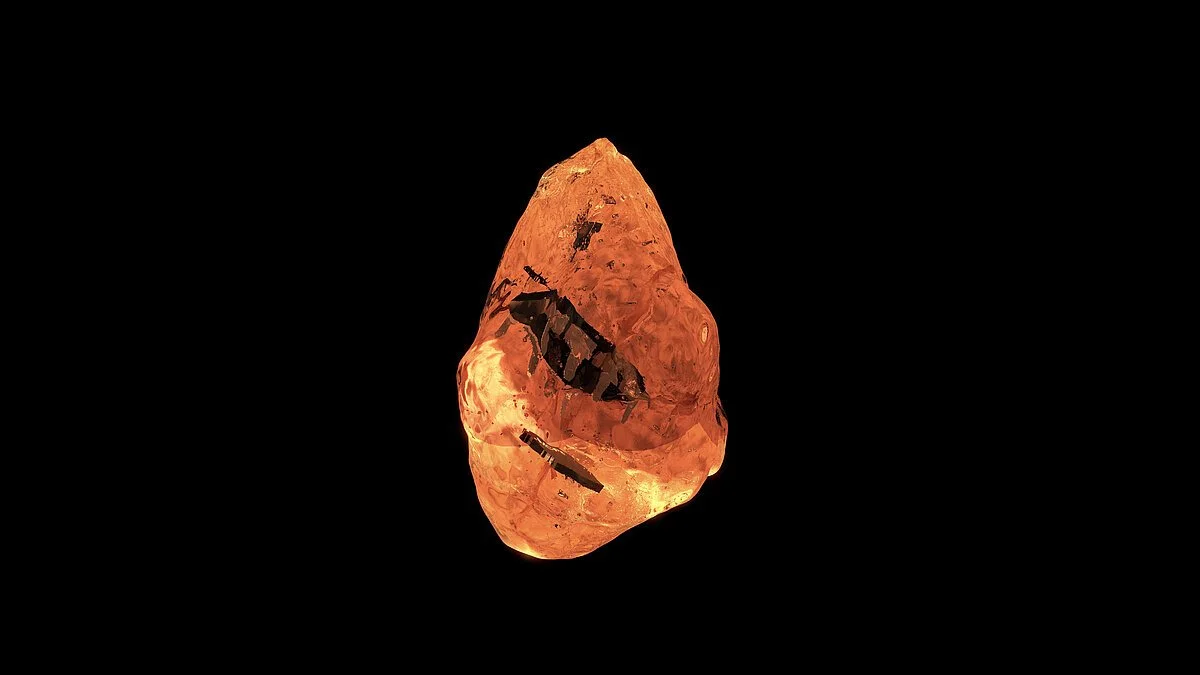
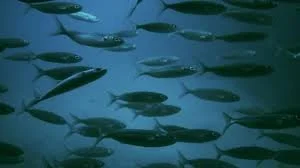
Filmed in the Baltic Sea, Hypoxia examines the growing phenomenon of marine dead zones—regions where oxygen levels have fallen so low that higher life can no longer exist. The work moves through this submerged environment with scientific attention and poetic restraint, revealing a seascape shaped by pollution, industrial waste, and the lingering debris of Cold War infrastructures.
Škarnulytė combines documentary imagery with mythological resonance. References to the Lithuanian sea goddess Jūratė, whose amber palace was destroyed beneath the waves, appear alongside images of decaying machinery and rising methane. Fact and fiction intertwine, mirroring the instability of the ecosystem itself. In Hypoxia, the ocean is presented both as an indicator and a record of ecological conditions. The film makes the consequences of oxygen depletion visible and highlights the complex connections between environmental degradation and human activity. Beneath the surface, technological and mythological traces coexist in a fragile balance, emphasizing the continued vulnerability of the ecosystem.
Emilija Škarnulytė, Hypoxia, video, 11' 48", 2023.
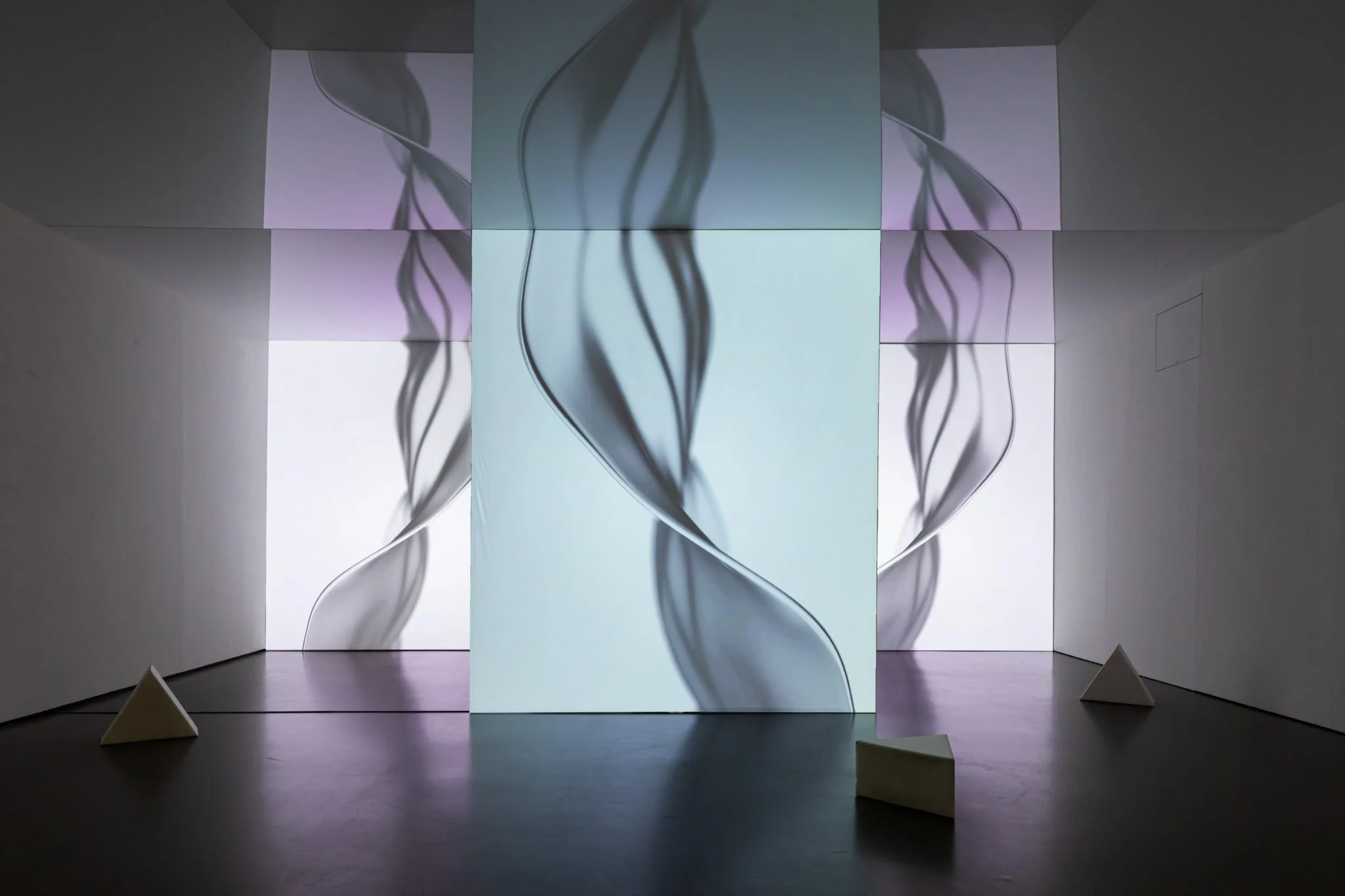
CIRCULAR TIME. FOR ALEXANDRA KASUBA
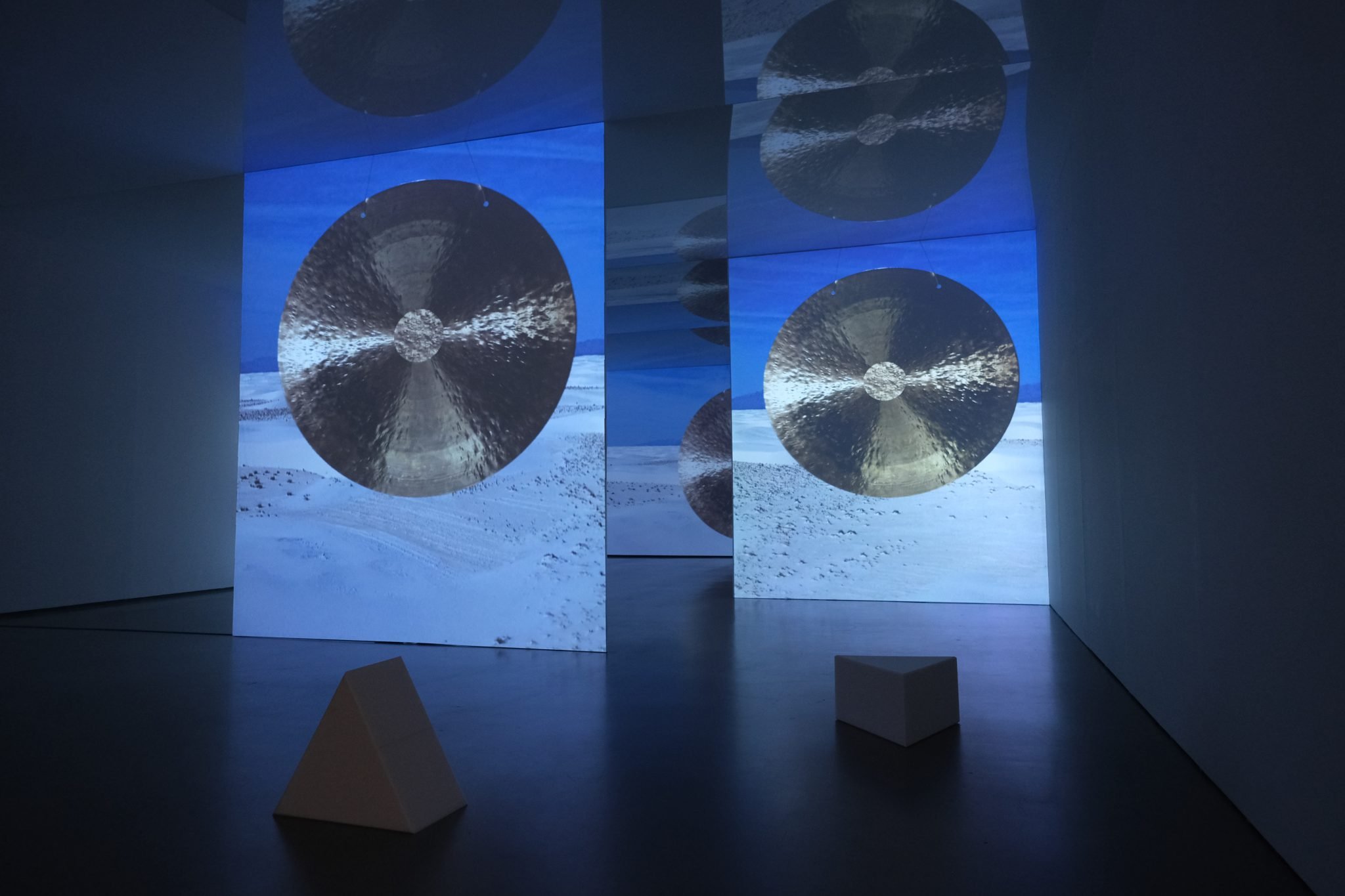
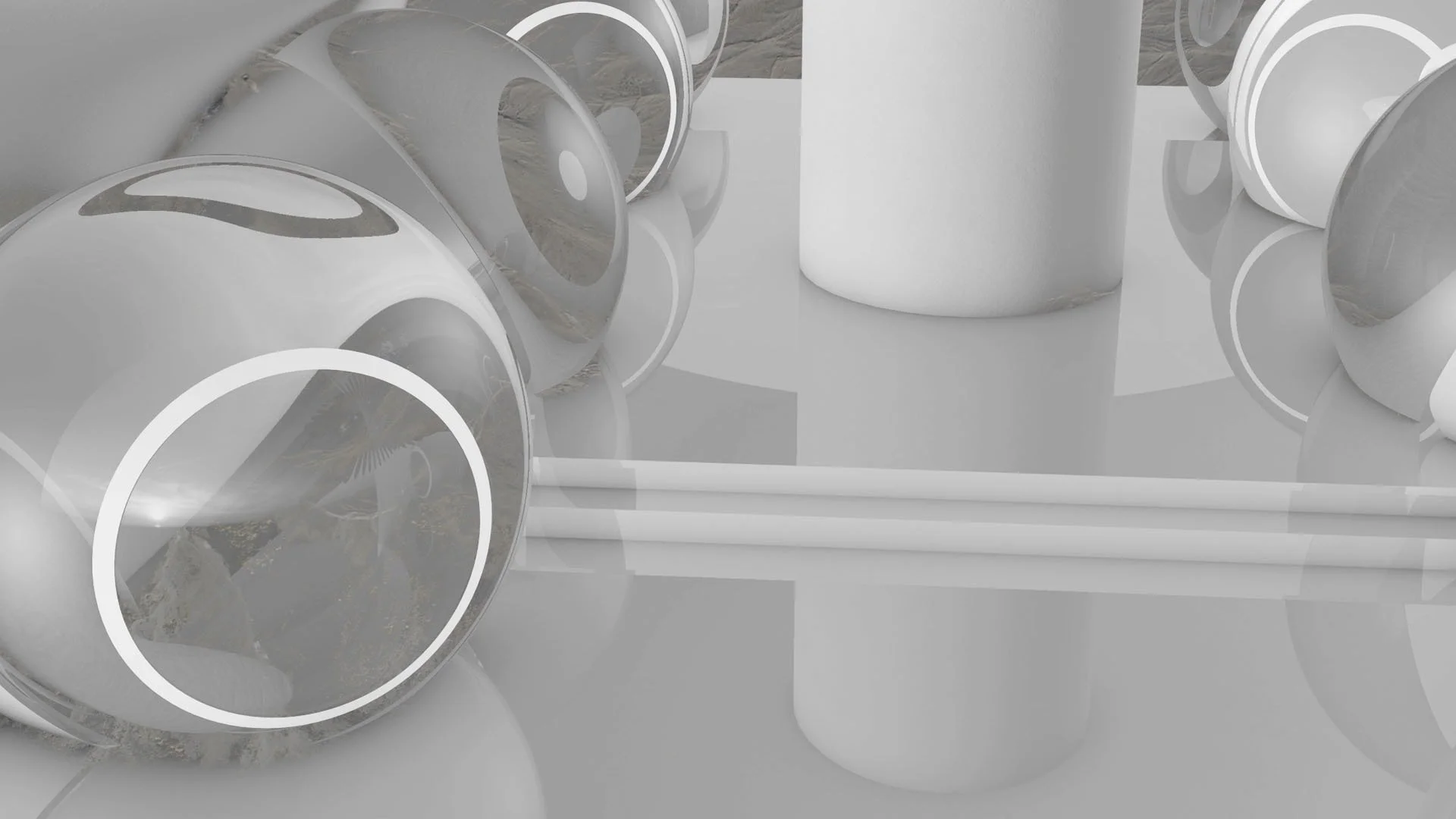
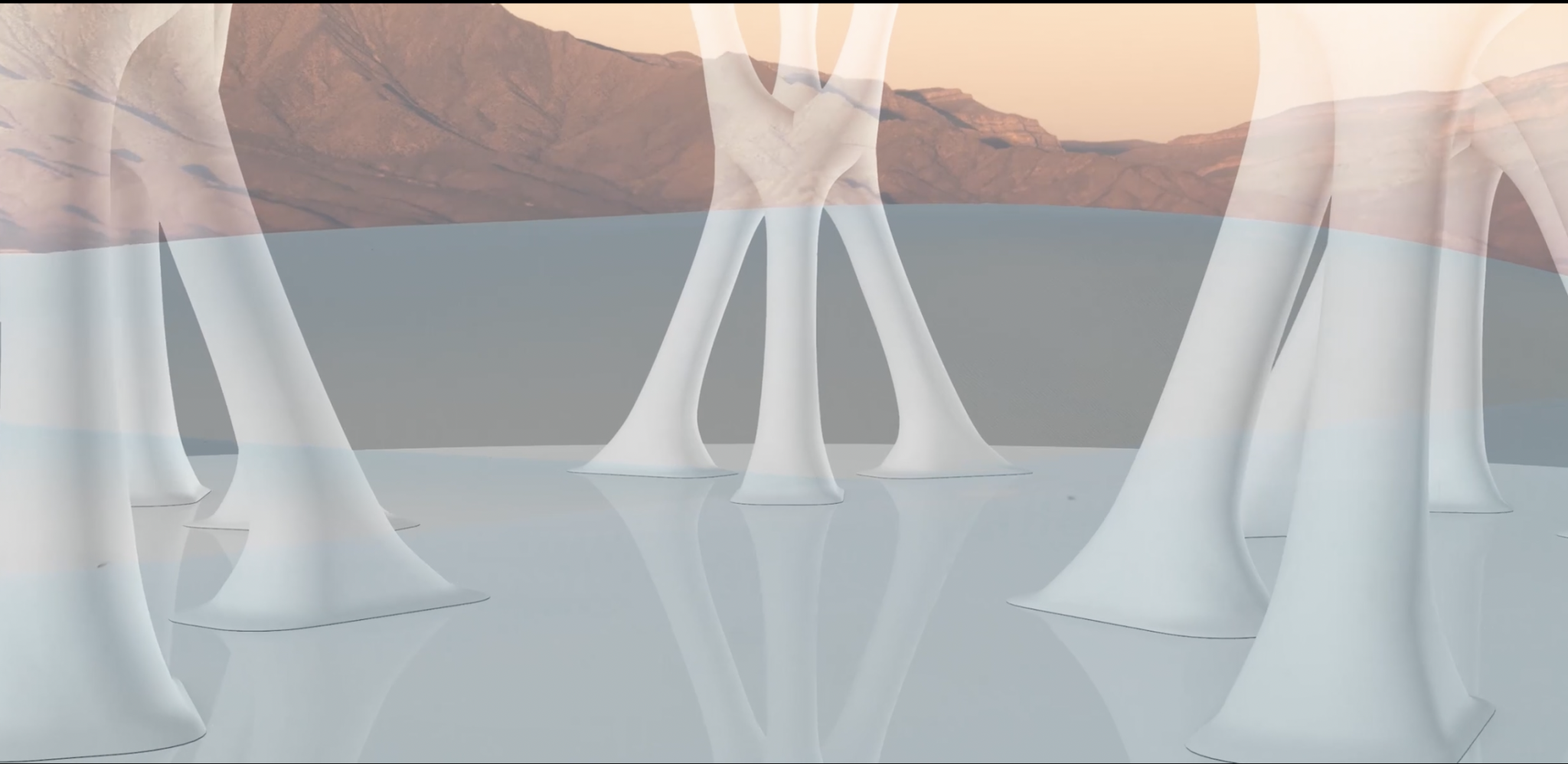
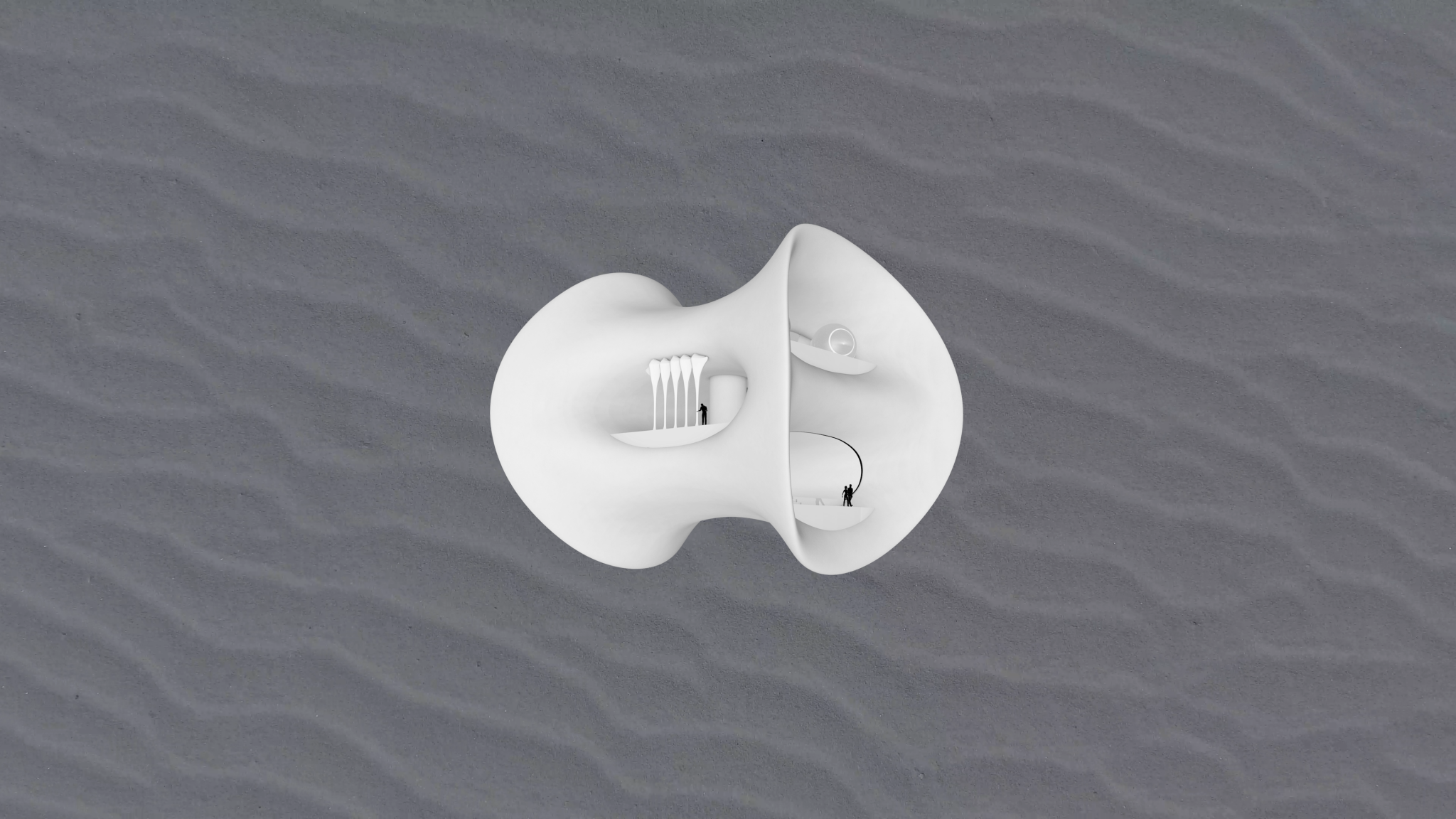
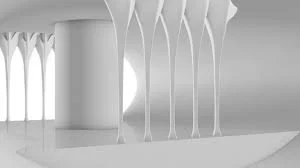
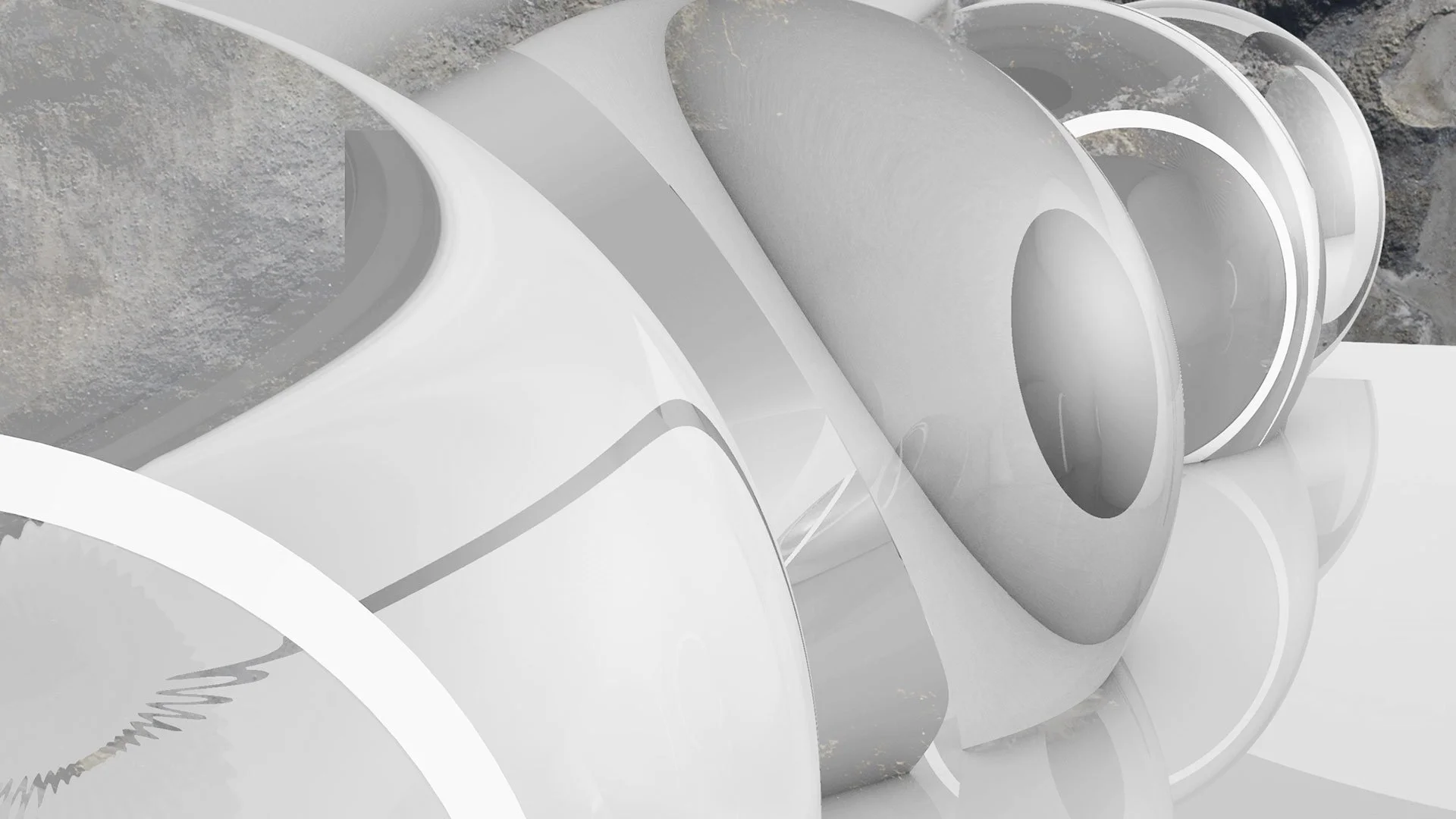
Filmed in the sand dunes of the Curonian Spit, Circular Time. For Alexandra Kasuba reflects on the legacy of Lithuanian-born environmental artist and visionary architect Alexandra Kasuba. The film traces the contours of her earthworks and organic architectures, situating them within the shifting landscape of wind, light, and sand. Moving between documentation and evocation, it explores Kasuba’s lifelong pursuit of harmony between human structures and natural forms.
Through long, meditative shots and subtle movements of the camera, Circular Time creates a dialogue between permanence and erosion, geometry and fluidity. The recurring circular forms evoke both Kasuba’s design language and the cyclical rhythms of the landscape itself—birth, decay, and renewal. References to the artist’s utopian ideals intersect with the material reality of time and weather, suggesting that architecture, like nature, is a living process rather than a fixed object. In Circular Time, the dune becomes a site of remembrance and transformation. The film contemplates how Kasuba’s vision continues to resonate in an era of ecological precarity—where the boundaries between art, environment, and temporality remain in constant flux.
Emilija Škarnulytė, Circular Time. For Alexandra Kasuba, HD film, 11’, 2021.
THE FOOTSTONE IN NIGHT WRITING
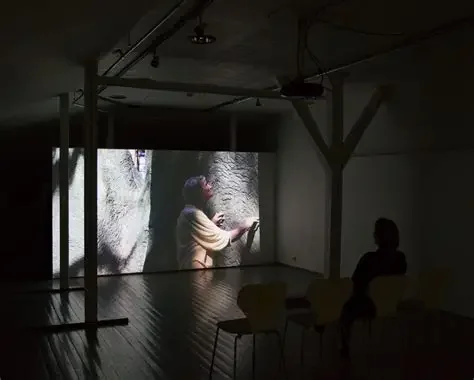
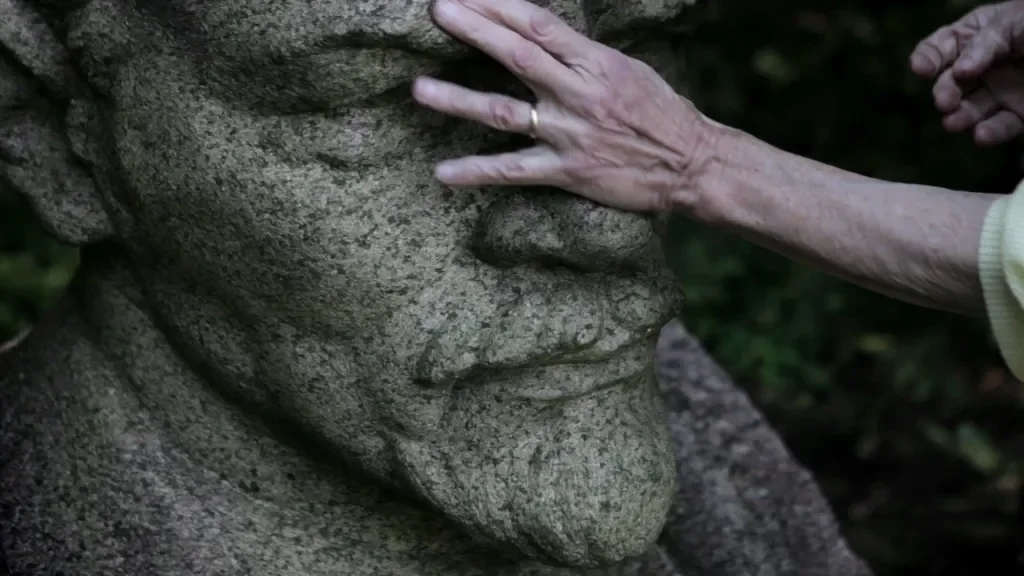
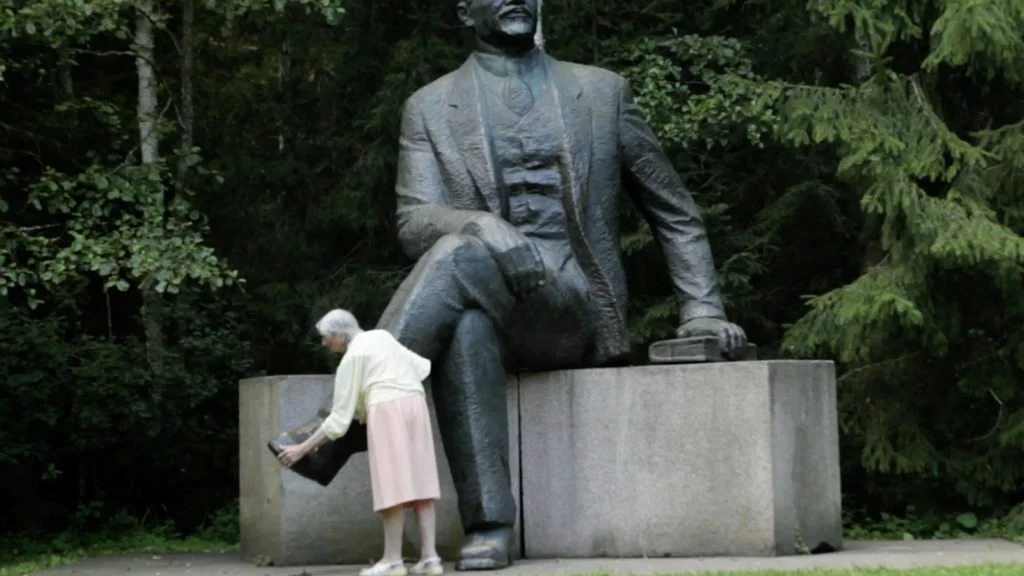
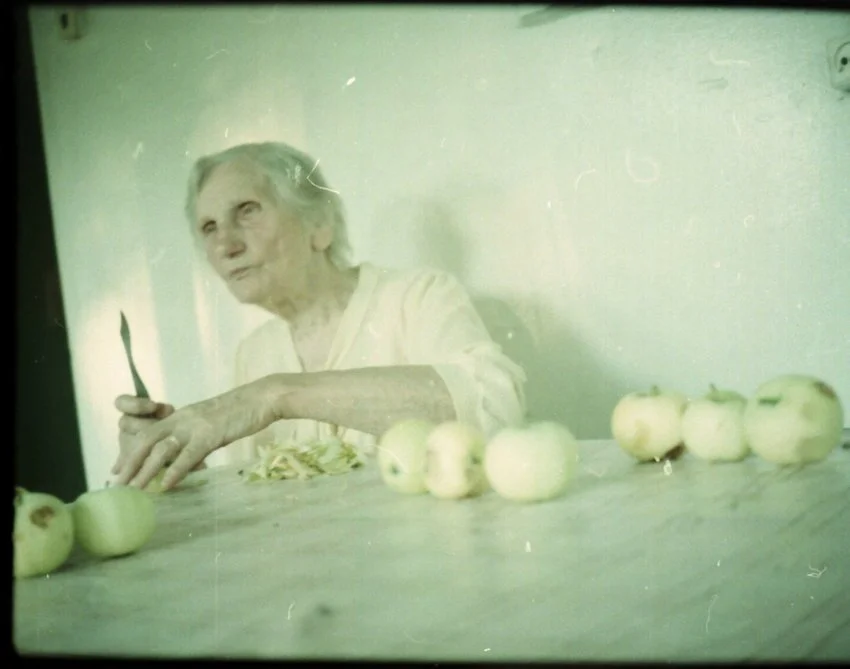
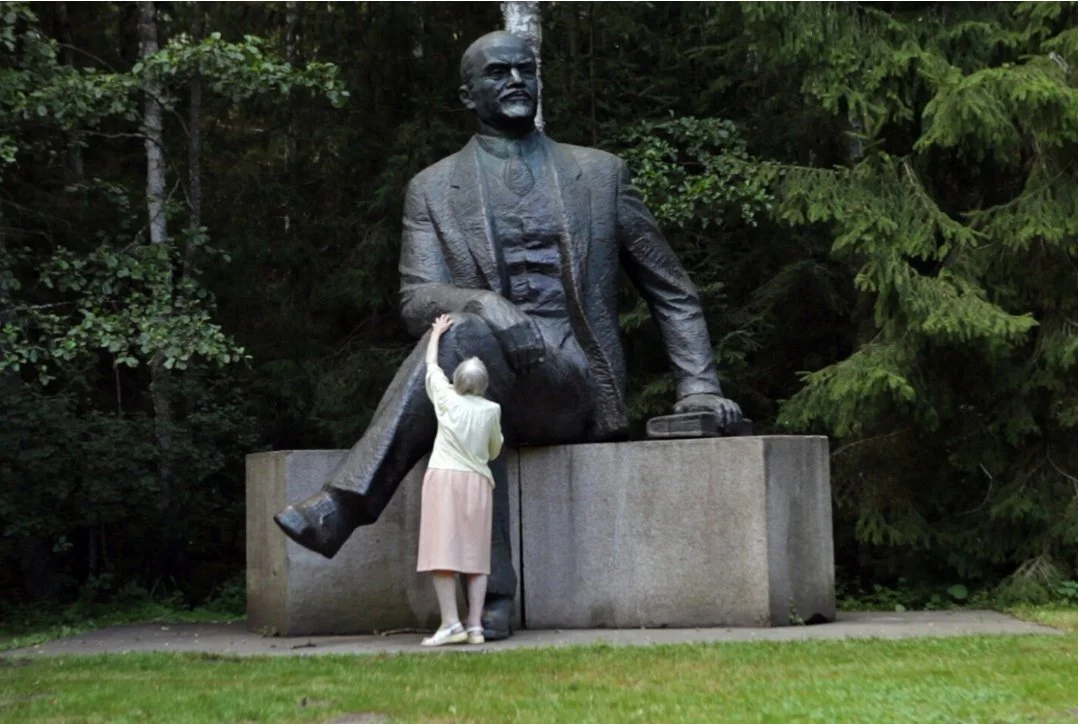
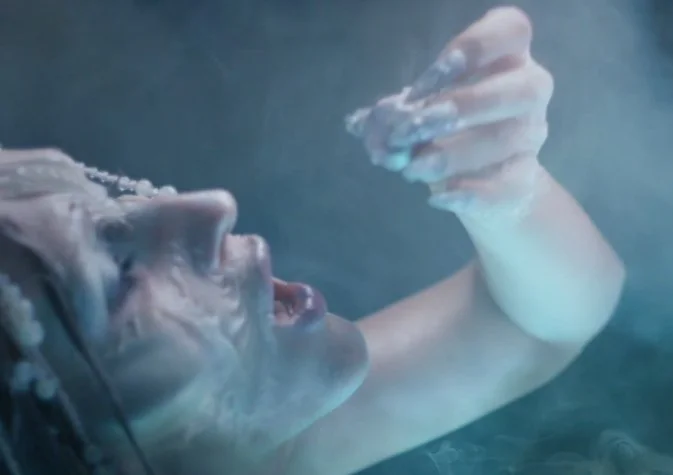
In The Footstones In Night Writing, Škarnulytė portrays her grandmother, who became blind in 1986, the year of the Chernobyl nuclear disaster. Doctors believed her blindness was caused by radiation carried through the air from Chernobyl to Lithuania. Filmed by Škarnulytė herself, the work becomes both a portrait and an intergenerational act of witnessing.
The camera quietly observes Aldona as she moves through Grūtas Park in southern Lithuania, a sculpture garden filled with statues removed from public spaces after the dissolution of the Soviet Union in 1991. Guided by memory and touch, Aldona feels the monumental sculptures with her hands . In one of the film’s most poignant moments, she reaches out to the towering figure of Stalin, sensing history through contact rather than sight. Shot on 16 mm film, its grain and texture evoke both intimacy and distance, linking the fragility of the image to that of the body it portrays.
Emilija Škarnulytė, The Footstones in Night Writing, 16mm film, 5', 2015.
TETHYS
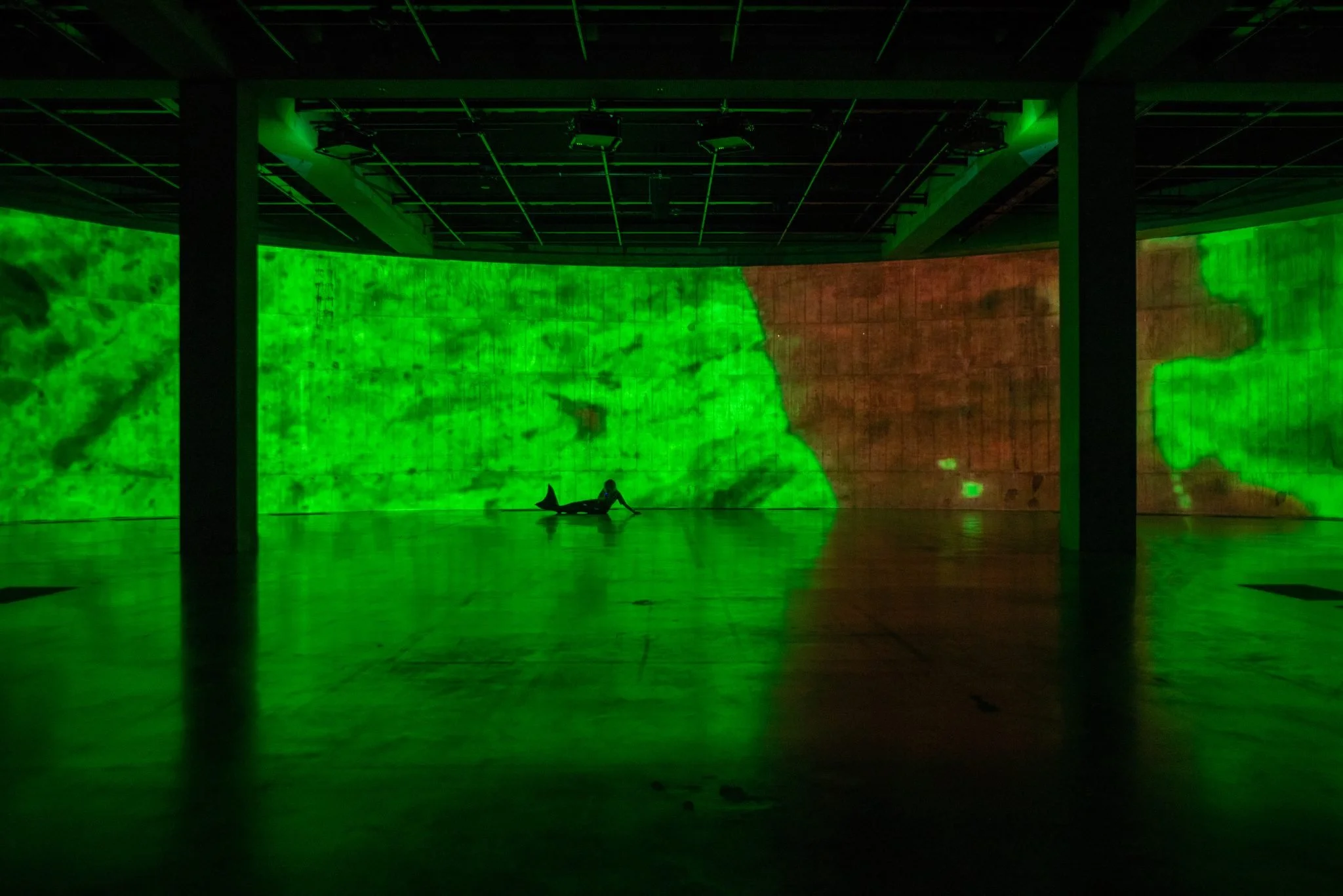
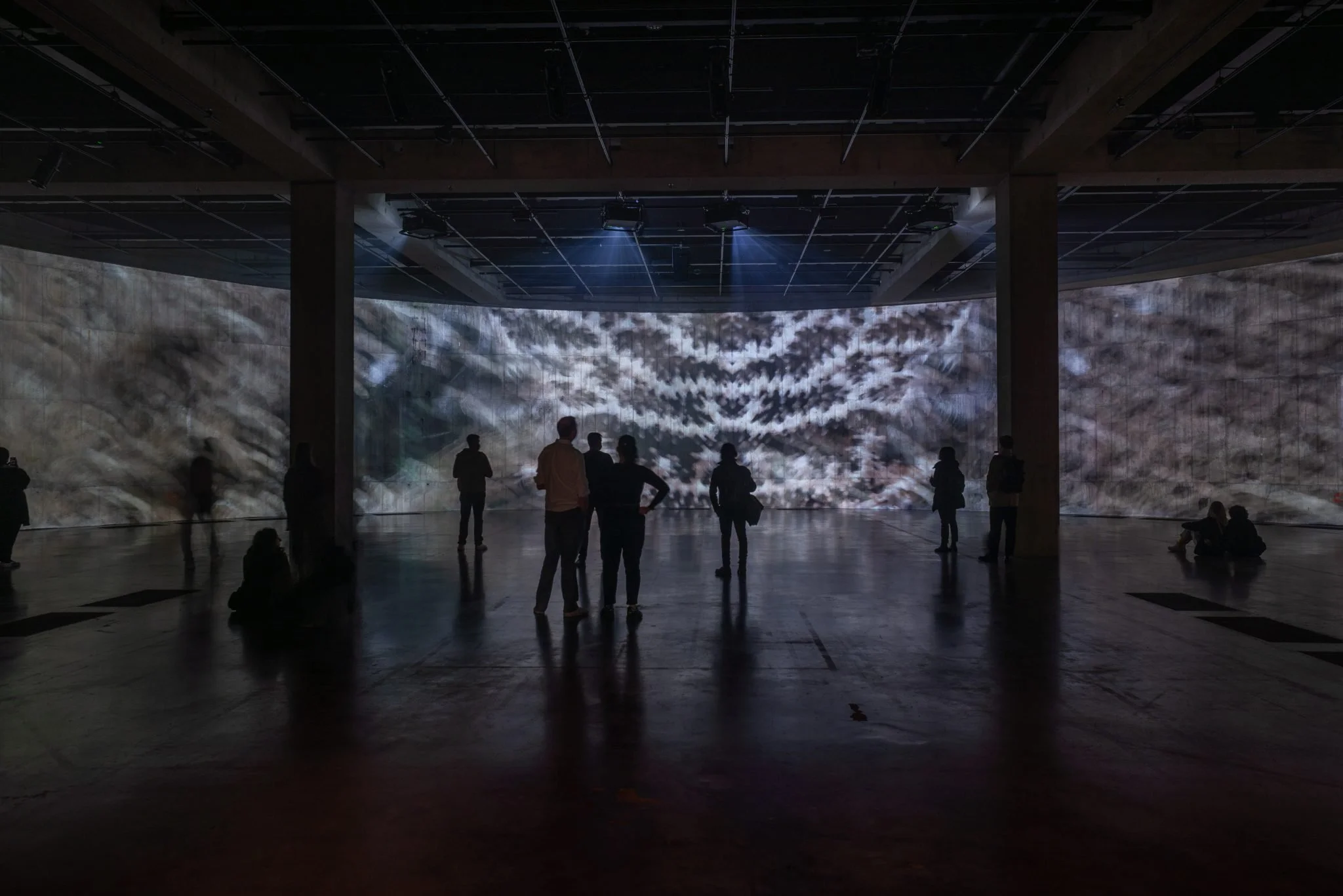
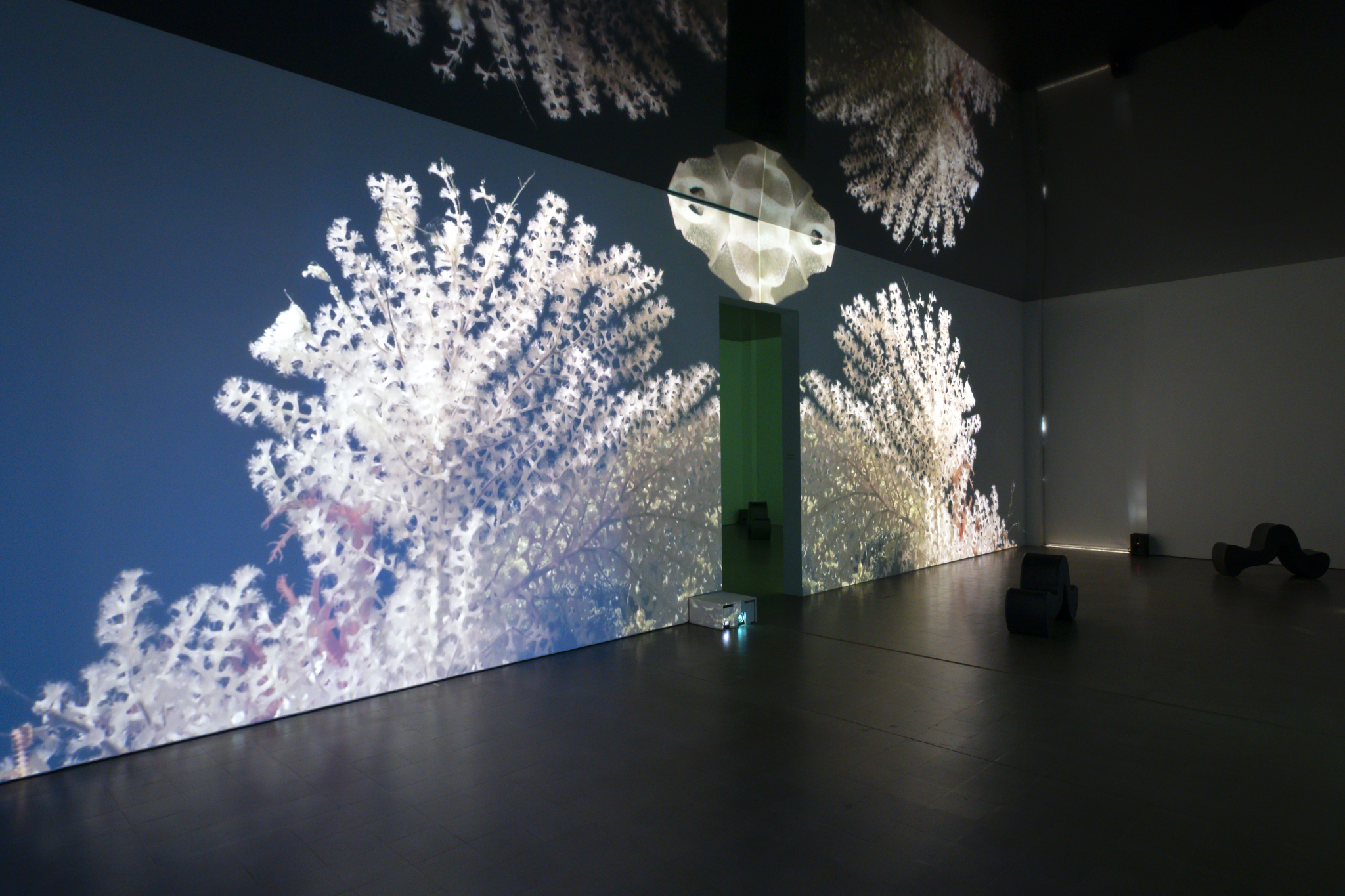
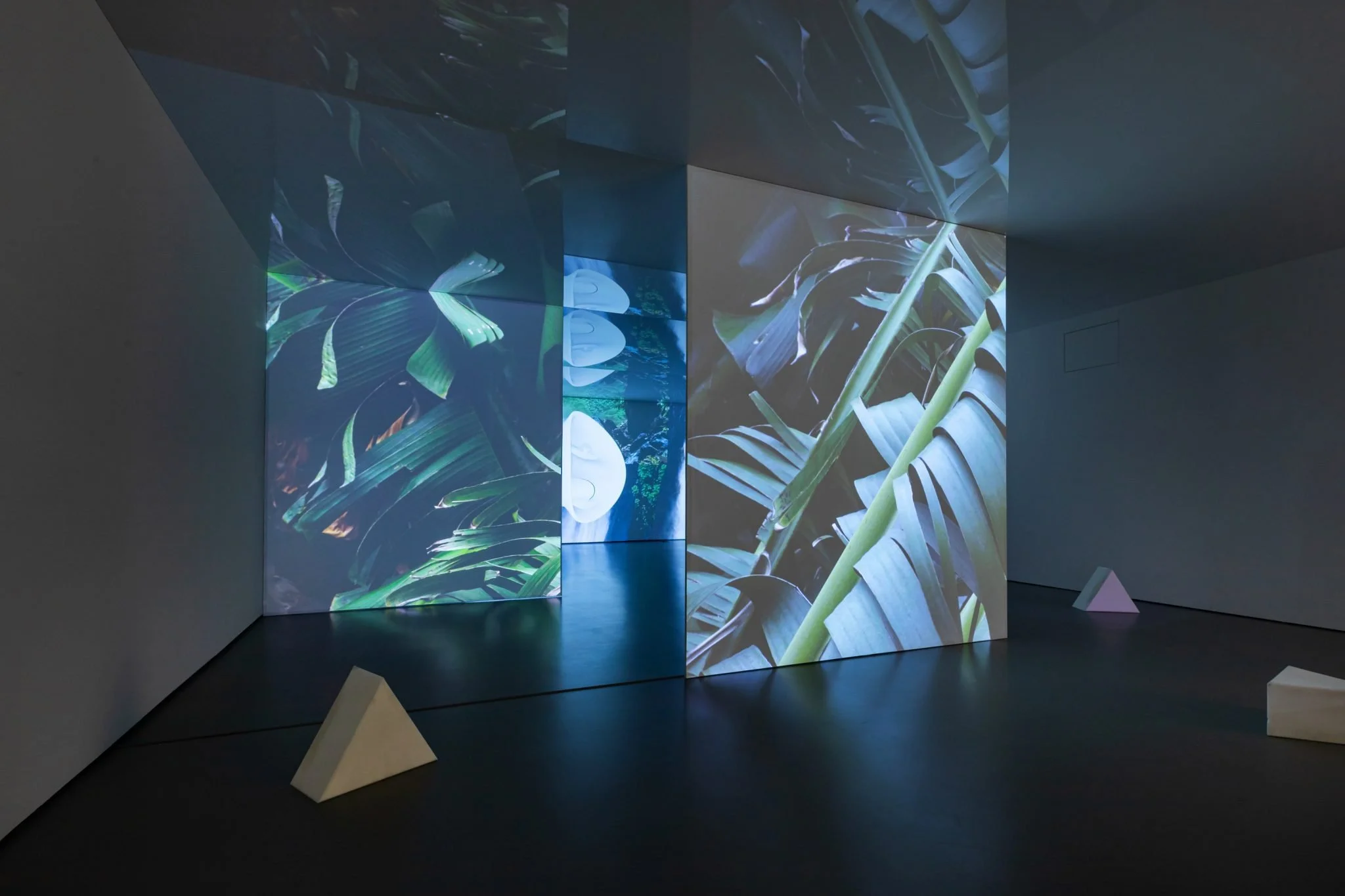
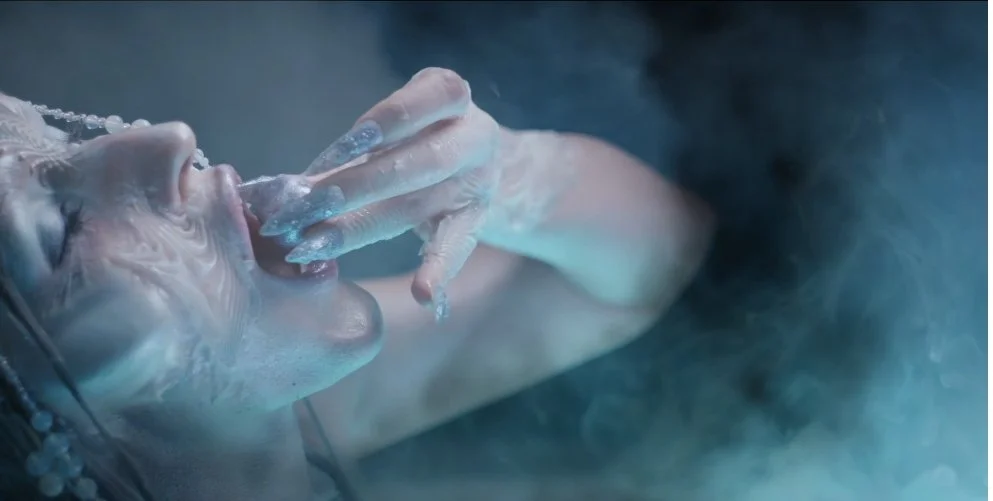
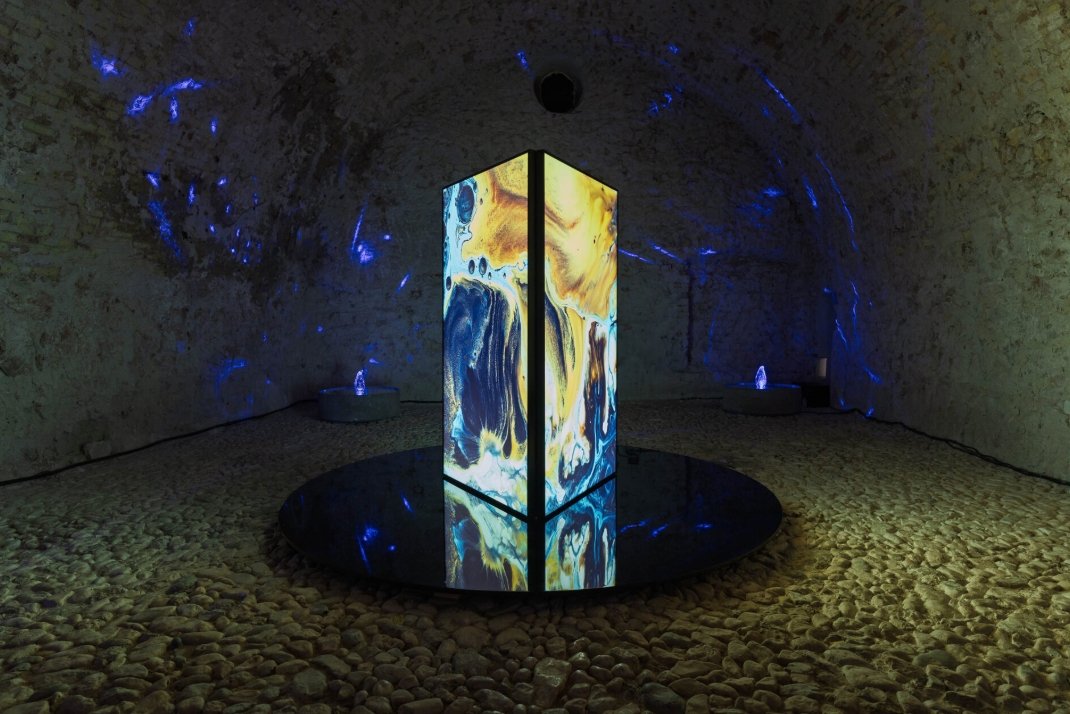
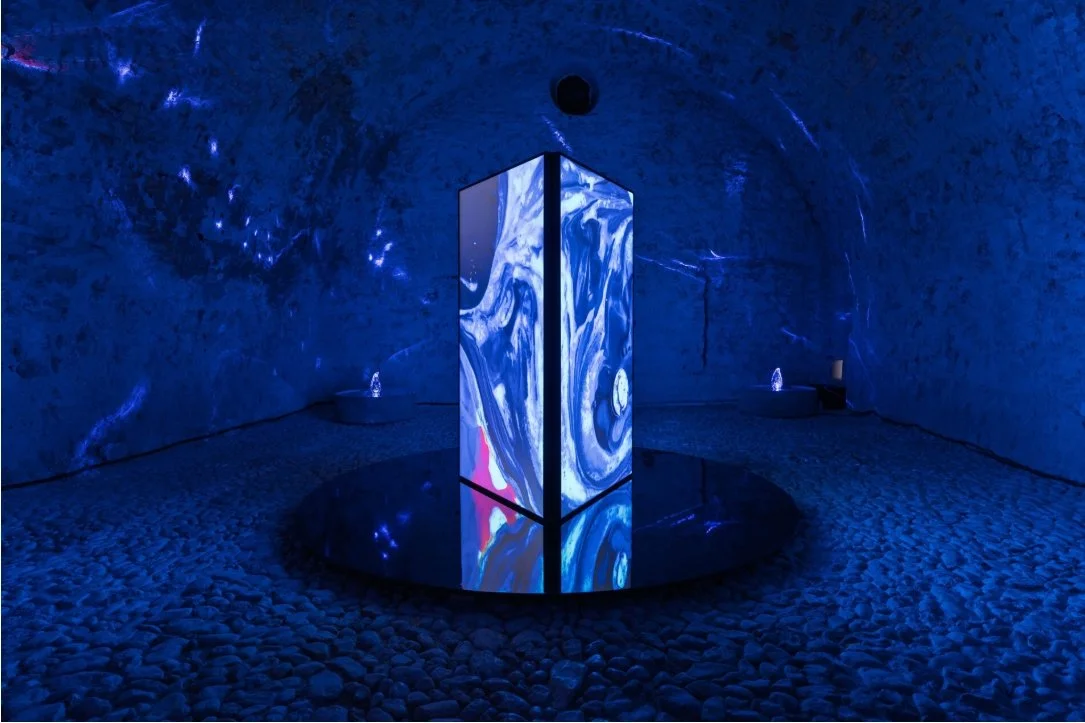
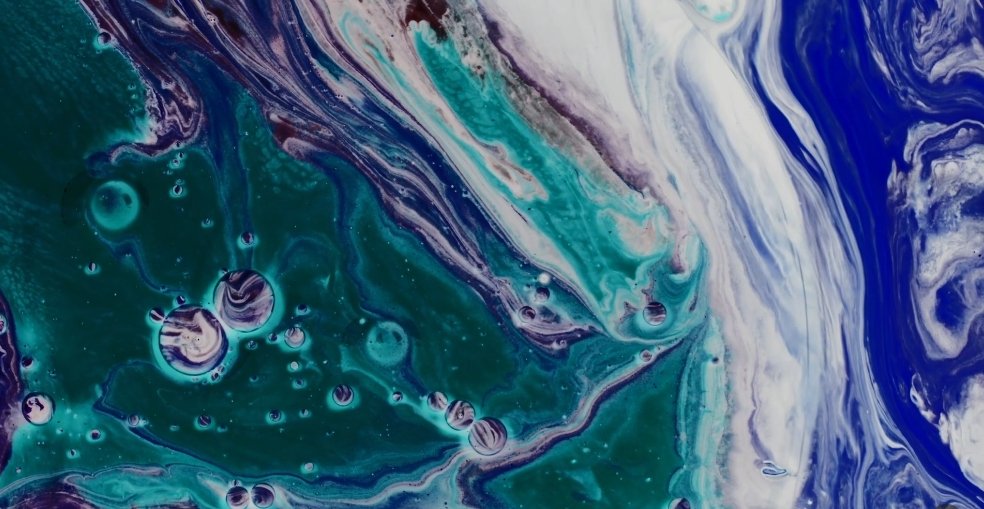
Tethys unfolds across three panoramic screens, immersing the viewer in the shifting boundaries between land and sea. The title refers to the ancient Tethys Ocean—a vanished body of water that once divided the supercontinents of Laurasia and Gondwana. Filmed in sites that were once seabeds and are now deserts, mountains, or salt plains, the work traces the geological memory of the ocean’s retreat. Combining scientific imagery with mythological reference, Tethys evokes both the vast temporal scale of planetary transformation and the fragility of contemporary ecosystems.
The camera moves slowly across mineral surfaces, fossilized strata, and evaporated lakes, revealing the traces of ancient currents that continue to shape the present. The soundscape layers seismic vibrations, wind, and low-frequency tones, creating a sensory experience that mirrors the deep rhythms of the Earth itself. Through its immersive spatial form, Tethys collapses the distance between epochs. The work invites reflection on the ocean as both origin and absence—a reminder that every landscape carries within it the memory of water.
Emilija Škarnulytė, Tethys, 4K, 3-channel video installation, 14’, 2024.
MIRROR MATTER
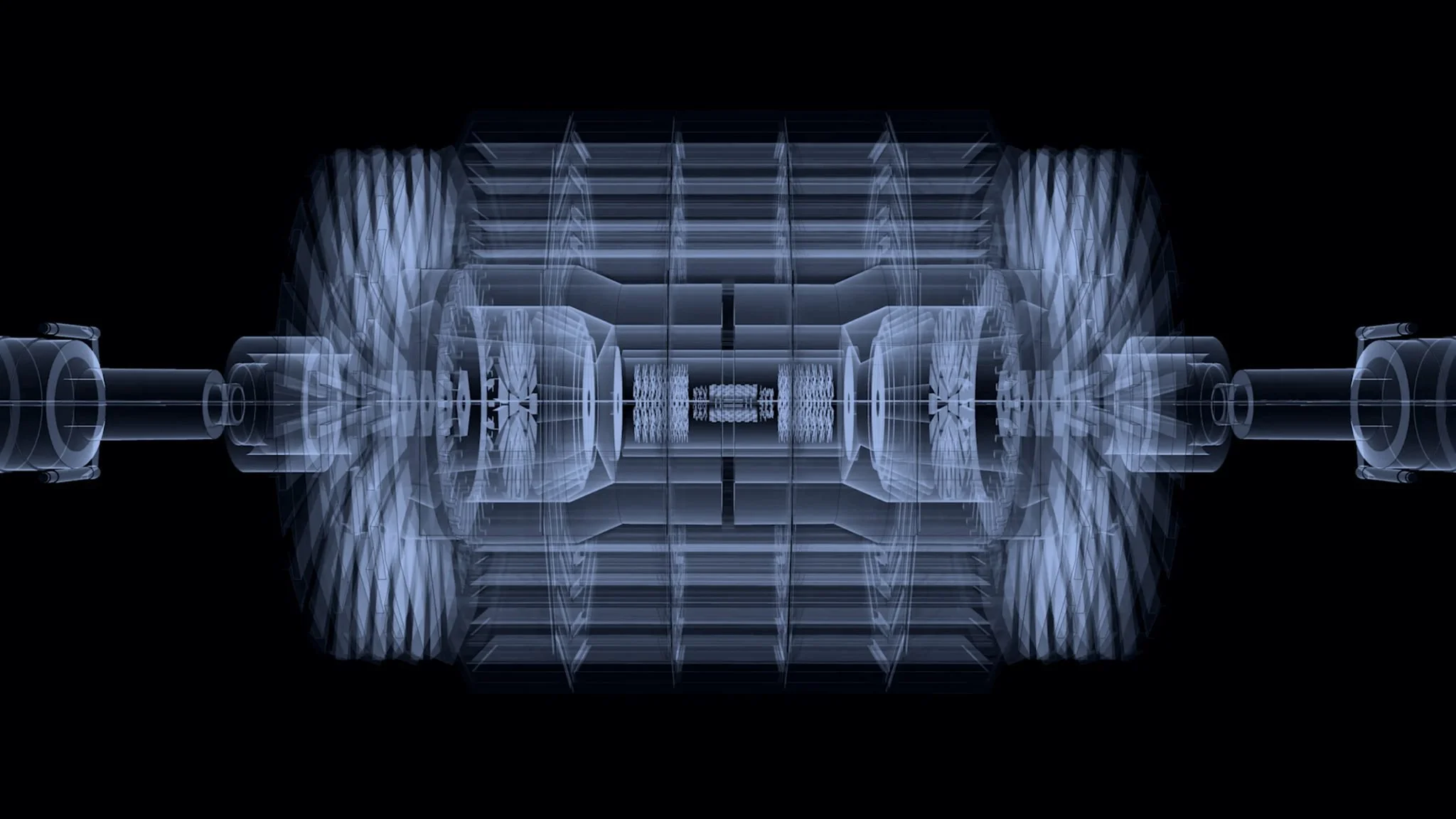
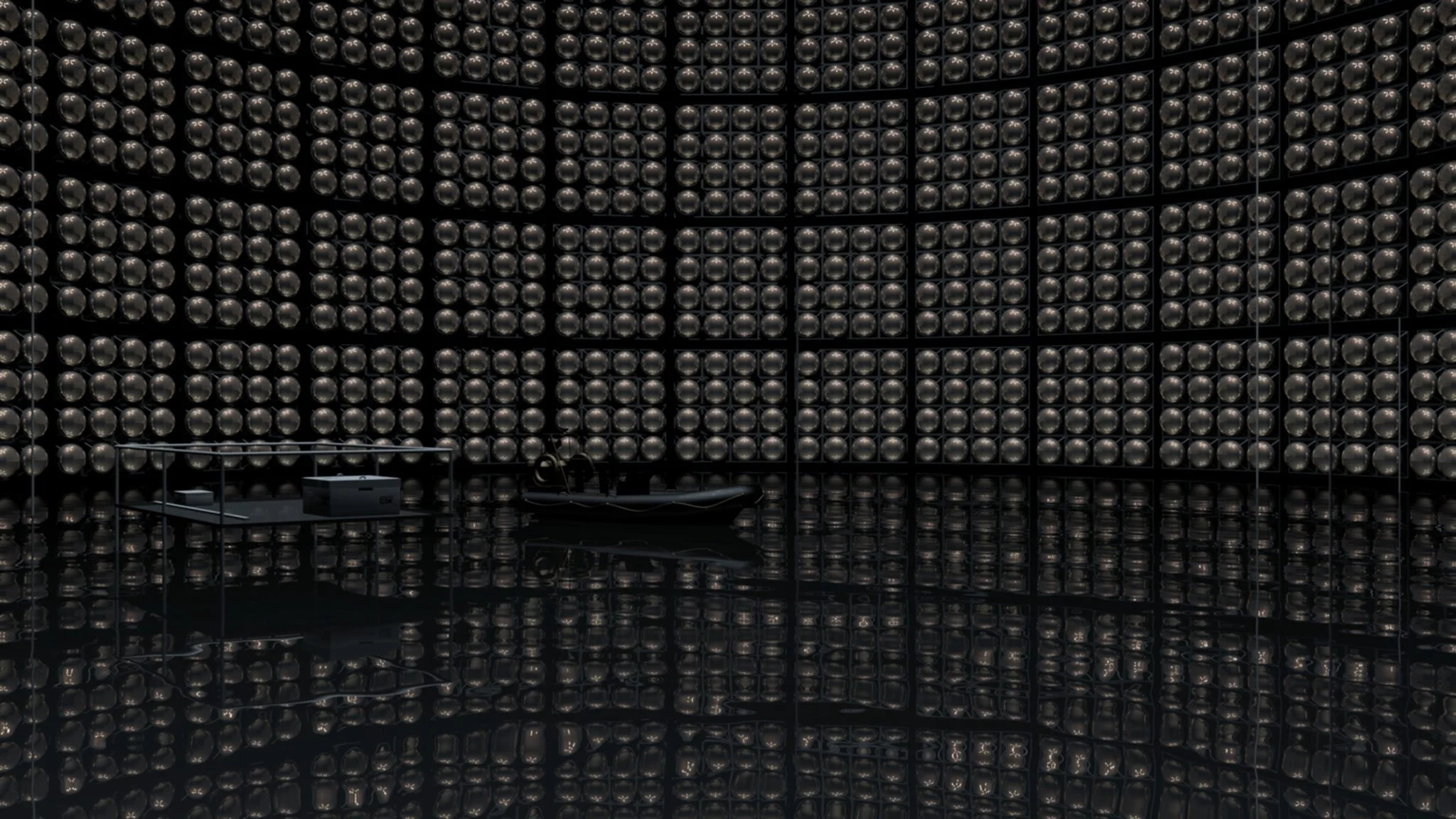
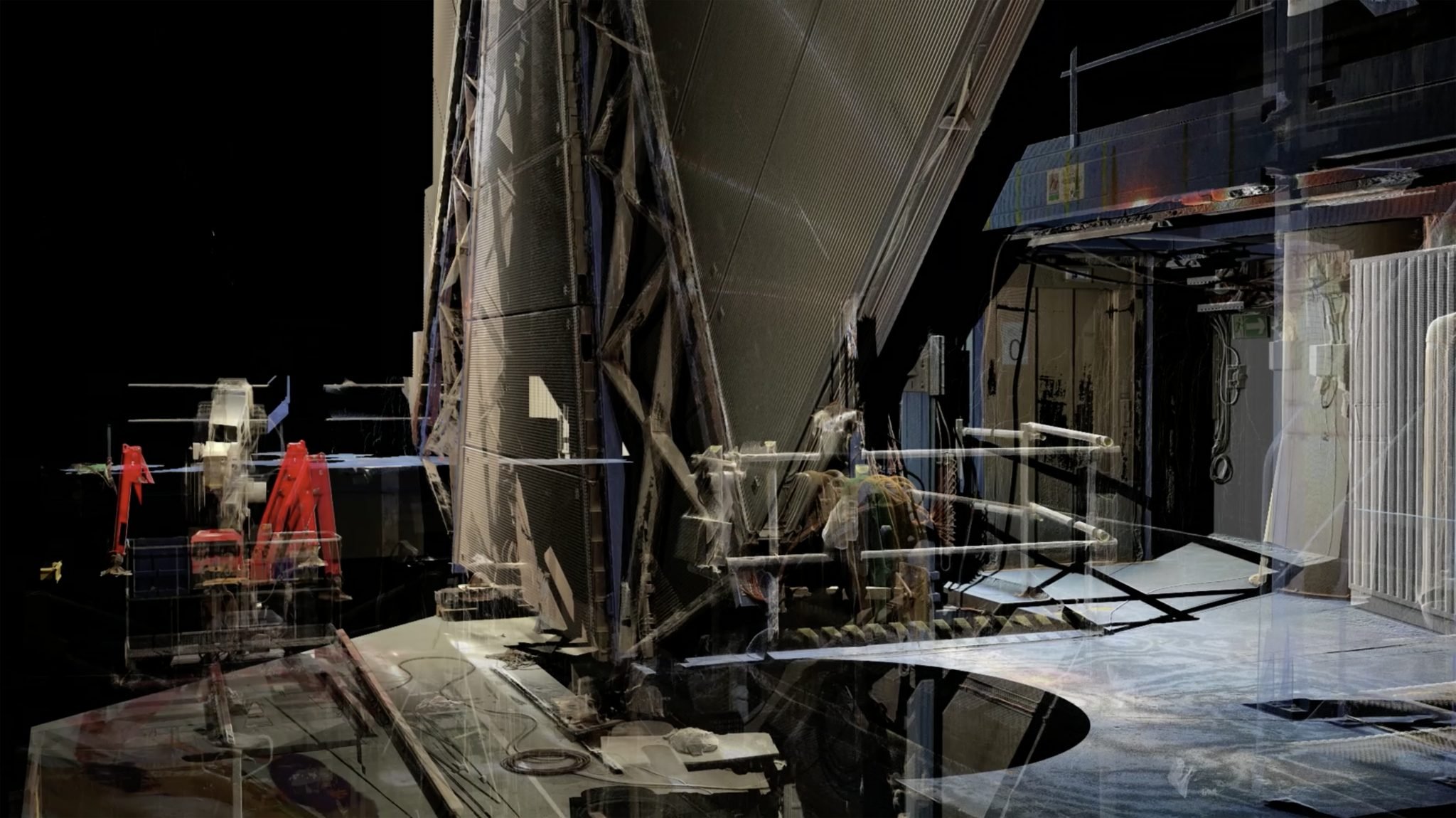
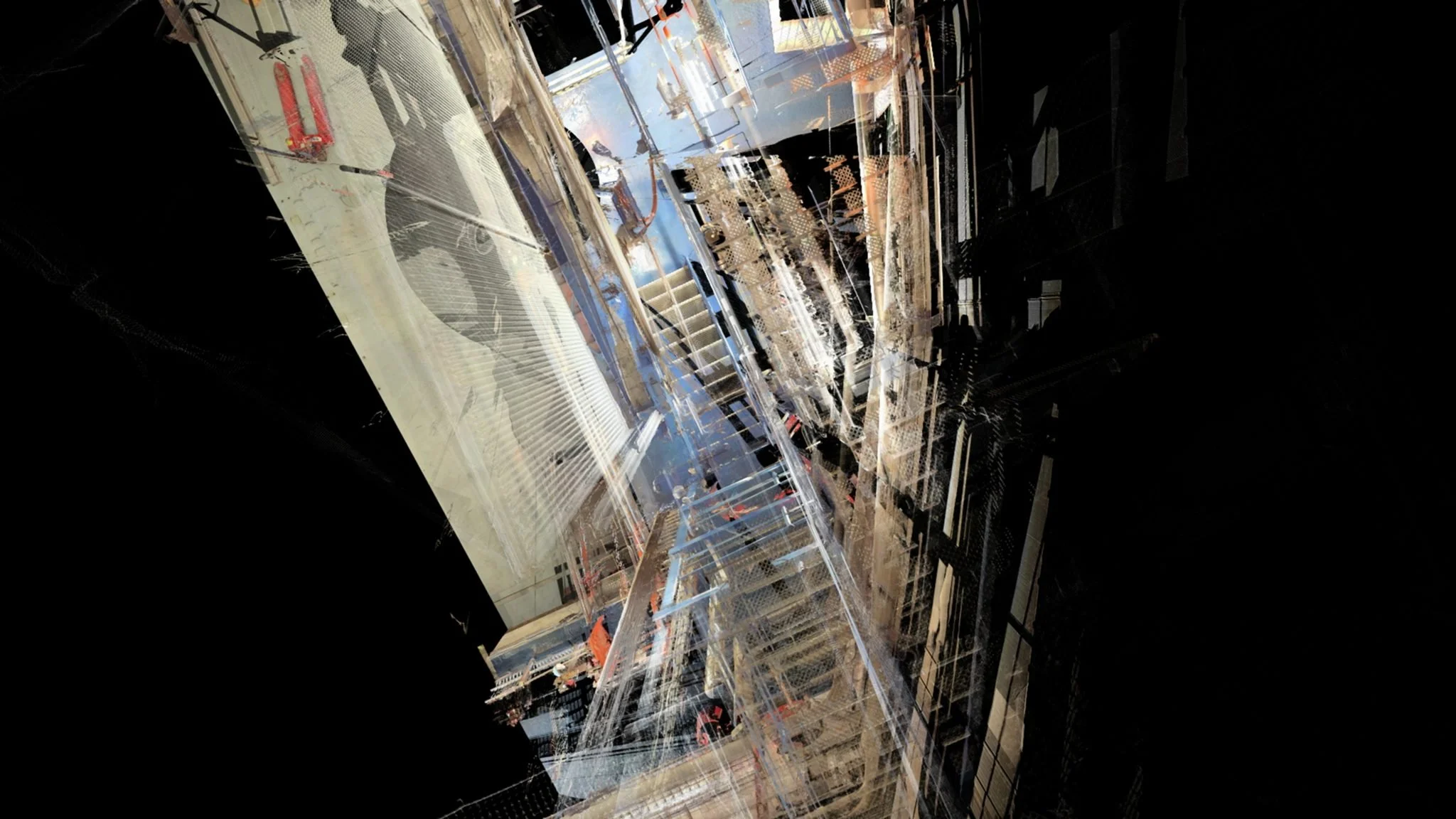
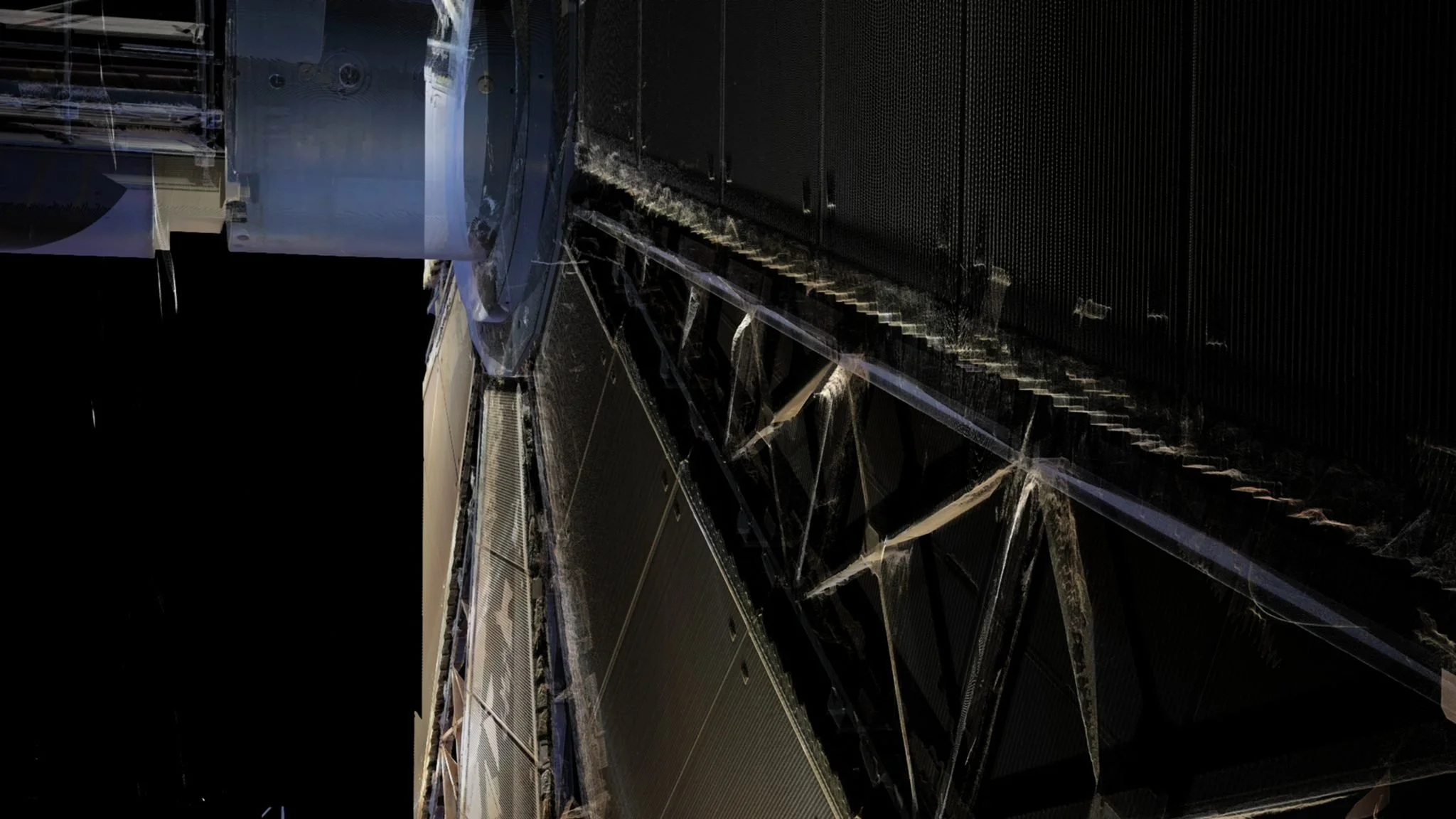
Mirror Matter unfolds within the decommissioned neutrino observatory beneath the Italian Alps, where the search for invisible particles once intersected with the geology of the mountain itself. The film navigates these subterranean chambers of scientific inquiry, connecting the physics of dark matter to the metaphysics of reflection.
Shot in low light, the camera moves through corridors lined with mirrors, sensors, and cables, revealing a world where observation turns inward. The mirrored surfaces capture fleeting images of the artist, of machinery, of light bending and vanishing—an optical echo of the universe’s unseen forces. The work balances documentation and speculation, oscillating between scientific experiment and cosmic allegory. In Mirror Matter, the underground laboratory becomes a metaphor for perception itself: the human desire to visualize what cannot be seen. The film reflects on the thresholds between matter and antimatter, body and data, presence and void—a meditation on the invisible architectures that underpin existence.
Emilija Škarnulytė, Mirror Matter, single-channel video, 12’, 2018.
GALLERY